Here Class 6 Odia Sahitya Sudha Chapter 4 Question Answer (“ଠକି ବସିଲେ ଠକିଯିବ” / Thaki basile thakijiba). These Question Answer, updated for 2026-27, Which help you score higher in your Class 6 MIL Odia exams.
Odisha Board Class 6 Sahitya Sudha Chapter 4 Thaki basile thakijiba Question Answer – ODIA
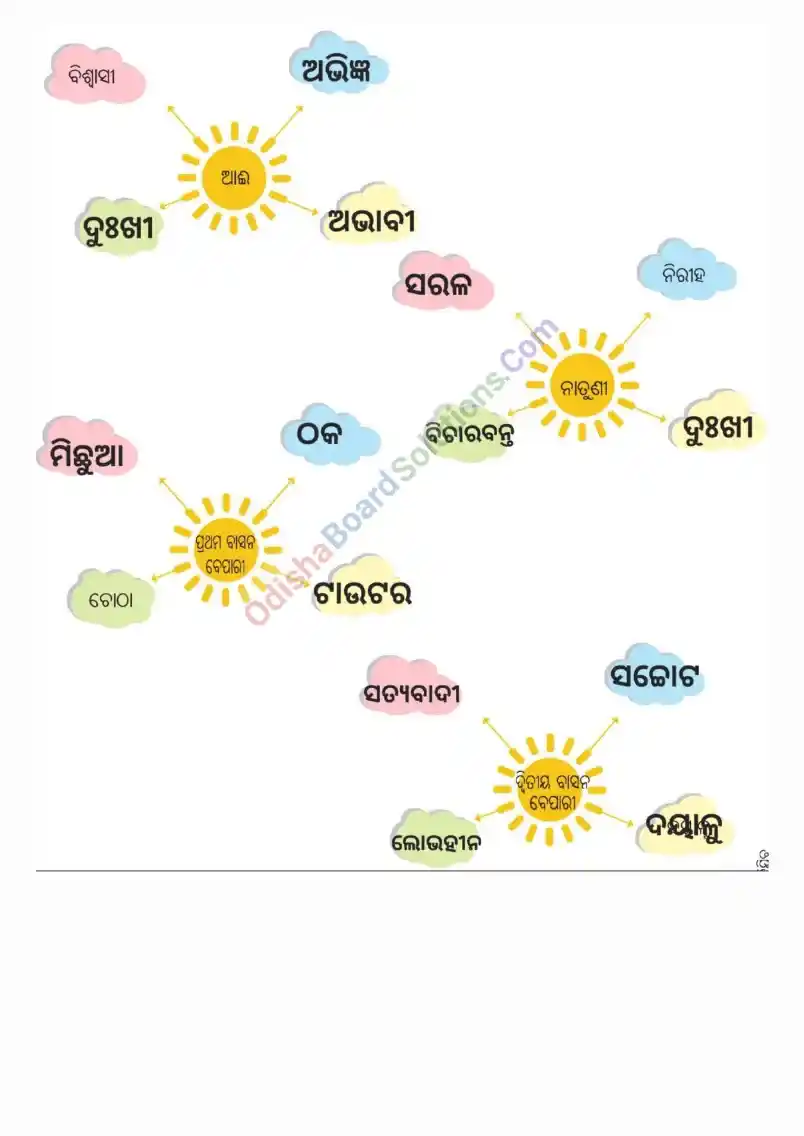
Thaki basile thakijiba Class 6 Question & Answers (Detailed Solutions)
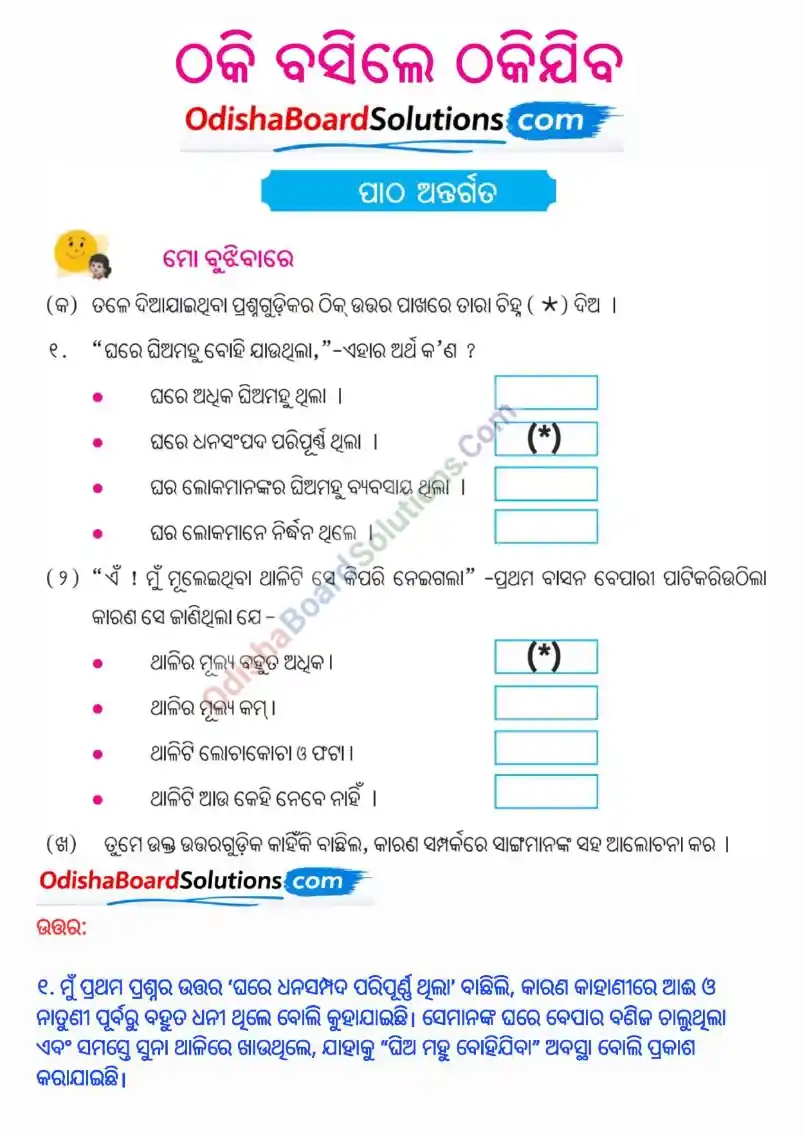
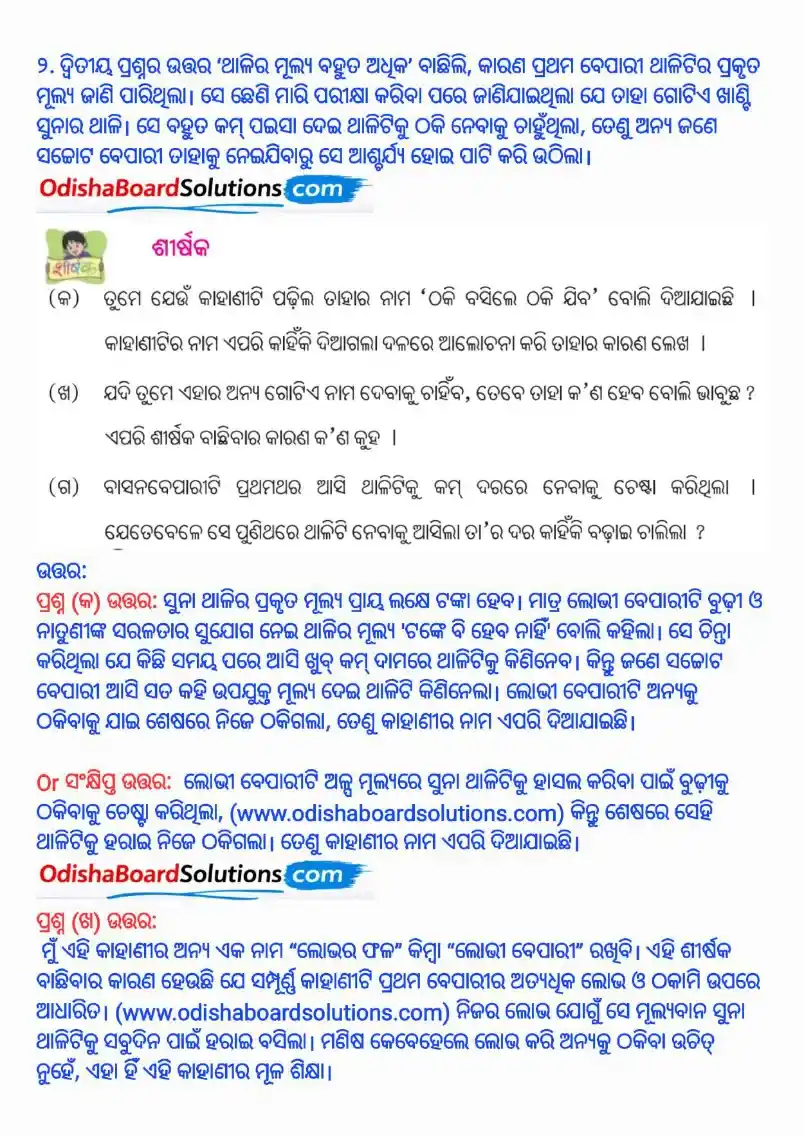
- Why is the story titled “Thaki Basile Thakijiba”?
The title literally means “If you plan to cheat, you will be cheated.”
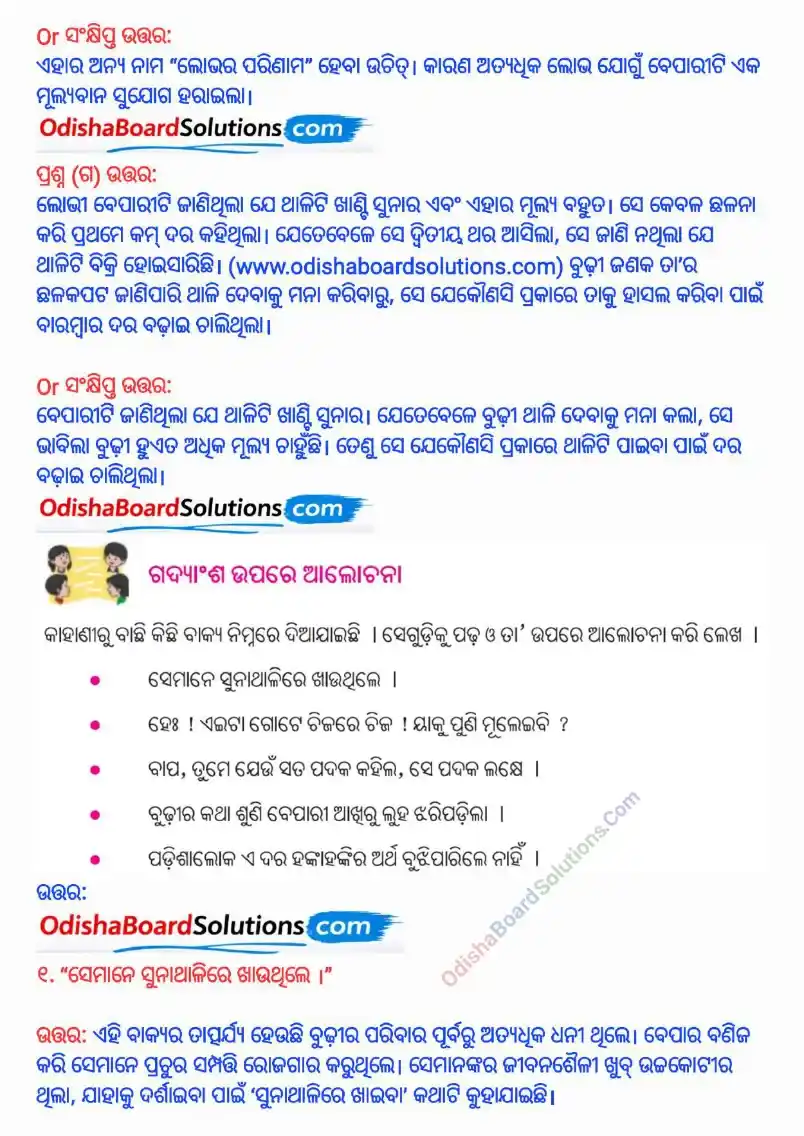
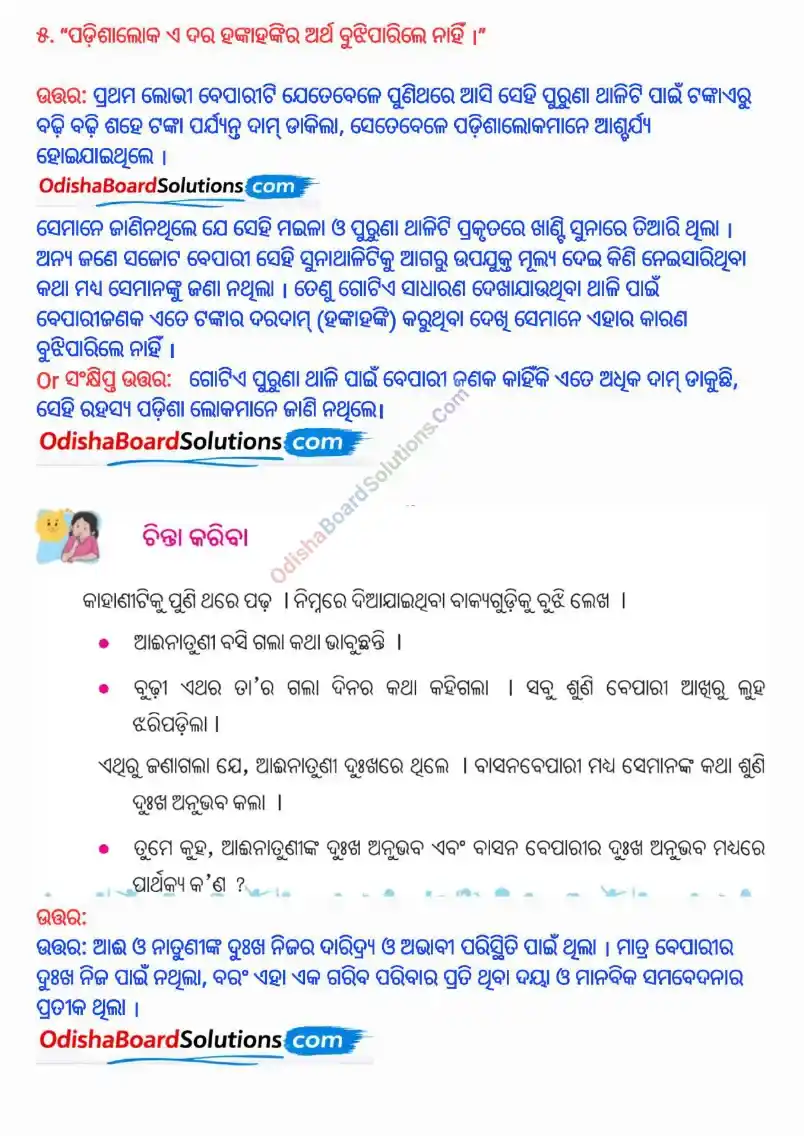
- Reason: The greedy merchant tried to deceive the old lady by calling her gold plate worthless, hoping to buy it for a few cents later. However, his delay allowed an honest merchant to buy it for its true value. By trying to cheat, the first merchant cheated himself out of a huge profit.
- Character Comparison: The Two Merchants
| Feature | Greedy Merchant | Honest Merchant |
| Intent | To exploit the poor for profit. | To conduct fair and truthful trade. |
| Action | Lied that the gold plate was junk. | Admitted the plate was pure gold. |
| Result | Lost the plate and his reputation. | Earned the plate and the family’s gratitude. |
- Significance of Important Phrases
- “Eating in Gold Plates”: This symbolises the family’s glorious past and high status before they fell into poverty.
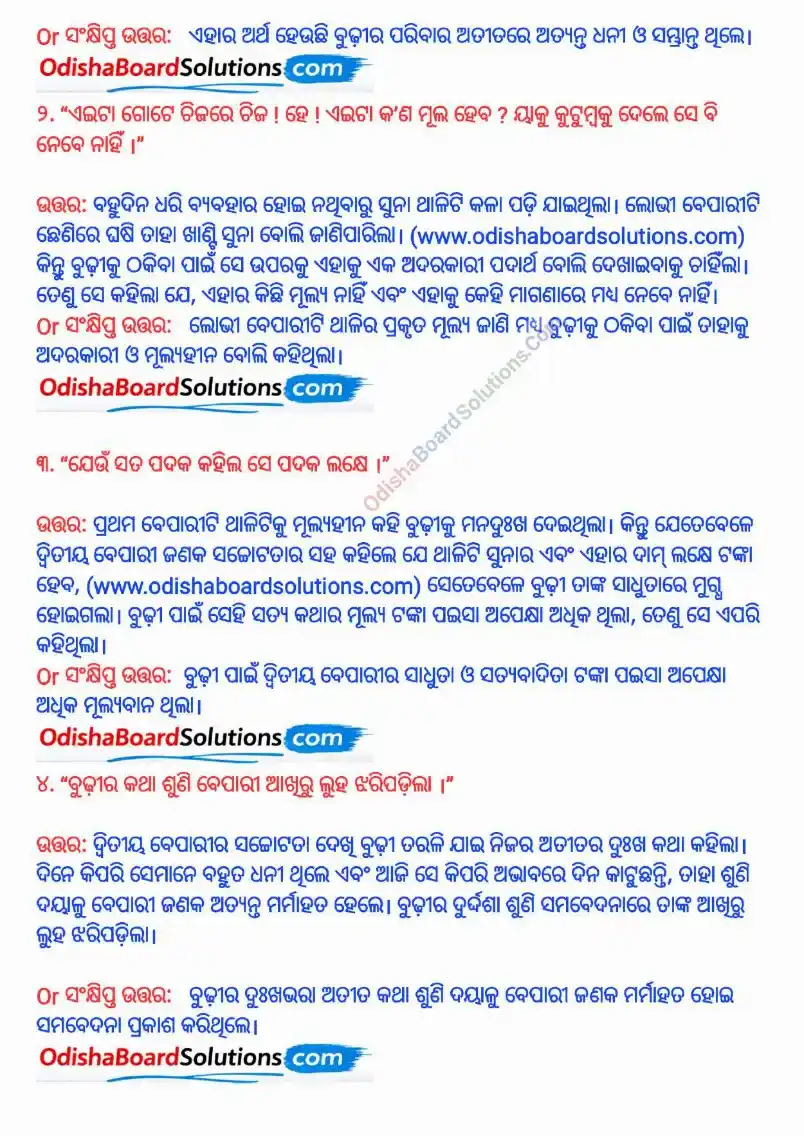
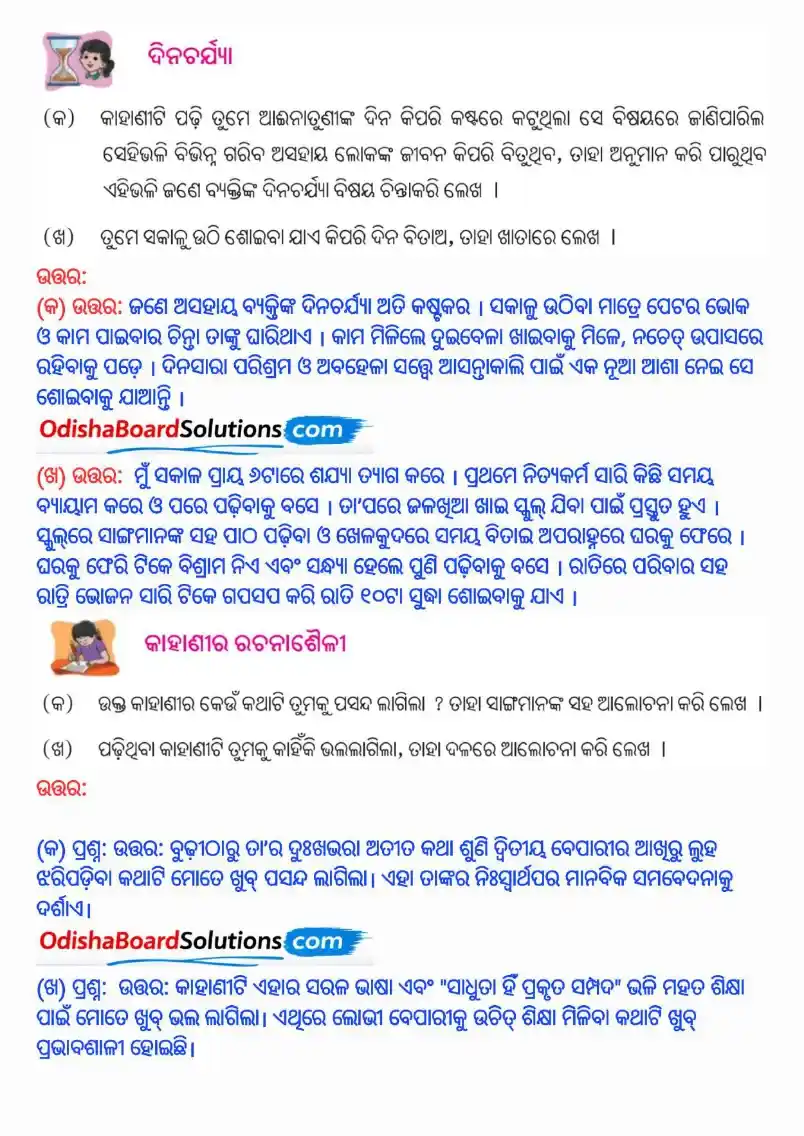
- “Your word is worth a lakh”: The old woman says this to the honest merchant because his truthfulness was more valuable to her than the money itself.
- “Dara Hankahanki” (Aggressive Haggling): This refers to the greedy merchant desperately raising his price when he realized the plate was gone, which confused the neighbors who didn’t know the plate was gold.
Moral Lessons for Students
- Truth Prevails: Honesty brings long-term rewards, whereas lies bring temporary hope but ultimate failure.
- Empathy: The honest merchant felt the old woman’s pain, showing that business should have a human heart.
- Contentment: Being satisfied with fair profit is better than losing everything due to extreme greed.
Grammar & Vocabulary (Rudi & Odia Usage)
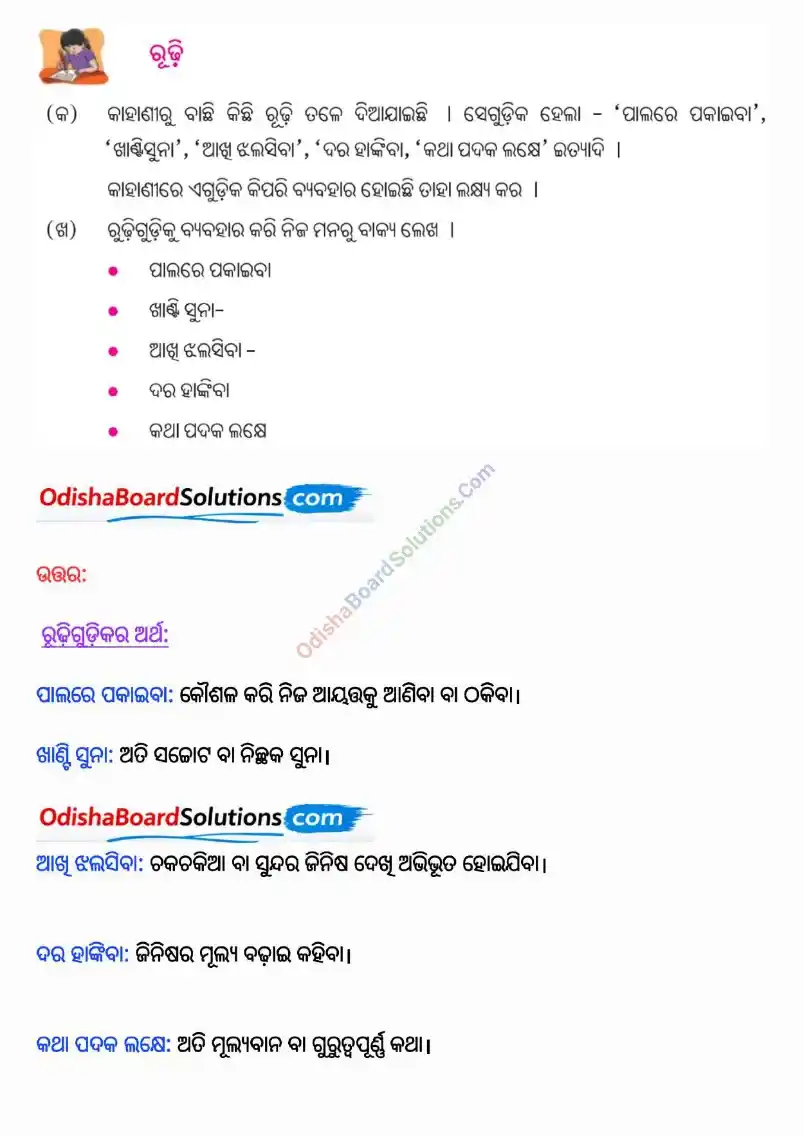
In this chapter, several Odia Idioms (Rudi) are used to enhance the narrative:
- Palare Pakaiba : To trap or trick someone.
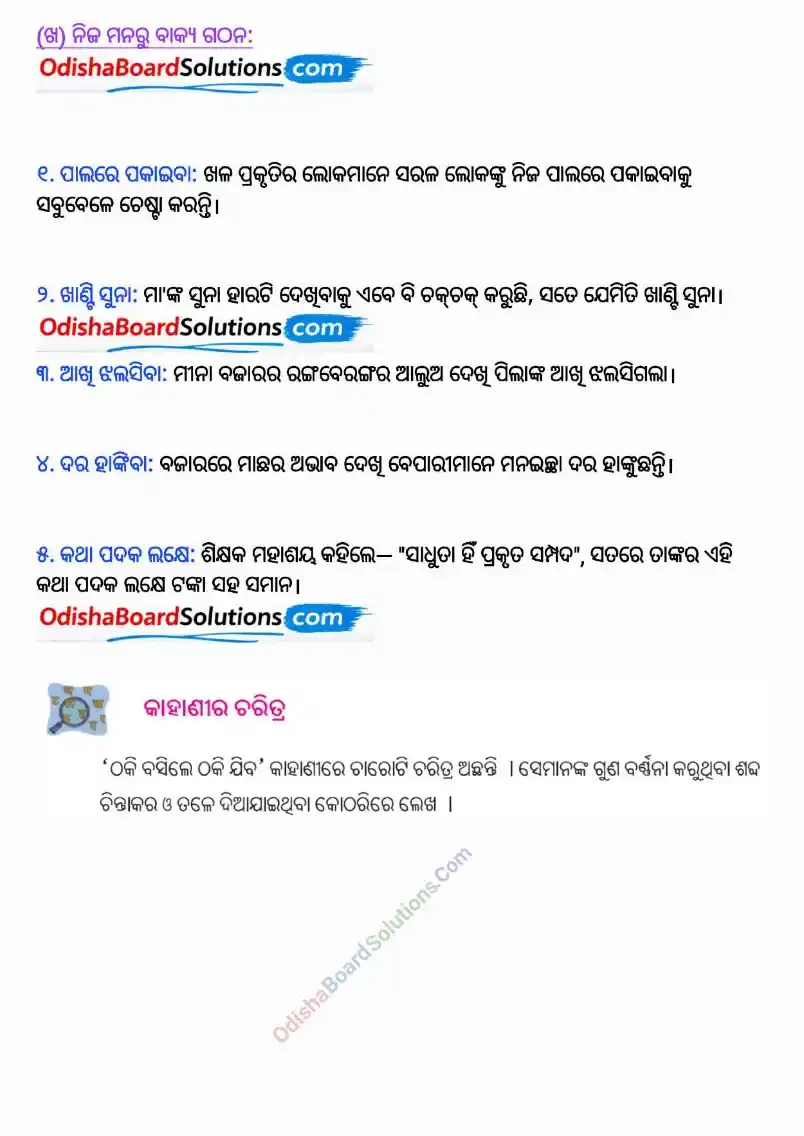
- Sentence: The greedy man tried to trap the innocent woman in his words.
- Khanti Suna : Pure gold / A person of pure character.
- Sentence: The honest merchant’s heart was like pure gold.
- Akhi Jhalasiba : To be blinded/dazzled by brightness or beauty.
- Sentence: The shine of the gold plate dazzled the merchant’s eyes.
- Katha Padaka Lakhe: Words of immense value.
- Sentence: Advice from elders is often worth a lakh.
Study Tips for Class 6 Students
- Contextual Reading: Understand that Jataka tales usually feature the Bodhisattva (Buddha in a previous life) as the honest character.
- Answer Writing: When asked about the “Background,” mention that it’s a moral story focused on Satya (Truth) and Daya (Compassion).
- Keywords: Use terms like Sajota (Honest), Lobhi (Greedy), and Niti-shiksha (Moral education) in your exams.
Frequently Asked Questions (FAQs)
Q1: Who wrote the story “Thaki Basile Thakijiba”?
A: It was collected and translated into Odia by Bansidhar Dash from the Jataka collection.
Q2: What was the real price of the plate?
A: The honest merchant estimated it to be worth nearly a lakh (100,000) rupees, whereas the greedy one offered less than a rupee.
Q3: What happened to the greedy merchant at the end?
A: He was left heartbroken and crying after realizing that his greed caused him to lose a life-changing treasure.