Here Class 8 Odia Sahitya Surabhi Chapter 1 Question Answer (“ଆସ ଉତ୍କଳୀୟ” / Asa Utkaliya). These Question Answer, updated for 2026-27, Which help you score higher in your Class 8 MIL Odia exams.
Odisha Board Class 8 Sahitya Surabhi Chapter 1 Asa Utkaliya Question Answer – ODIA
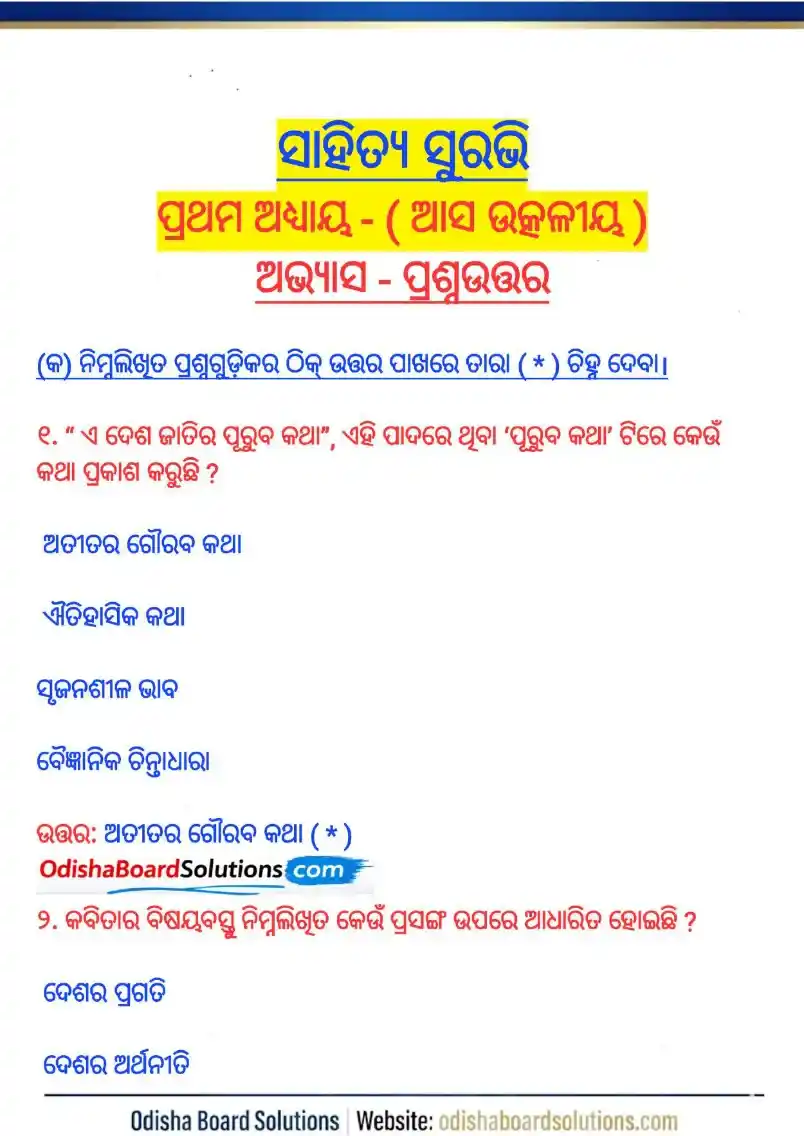

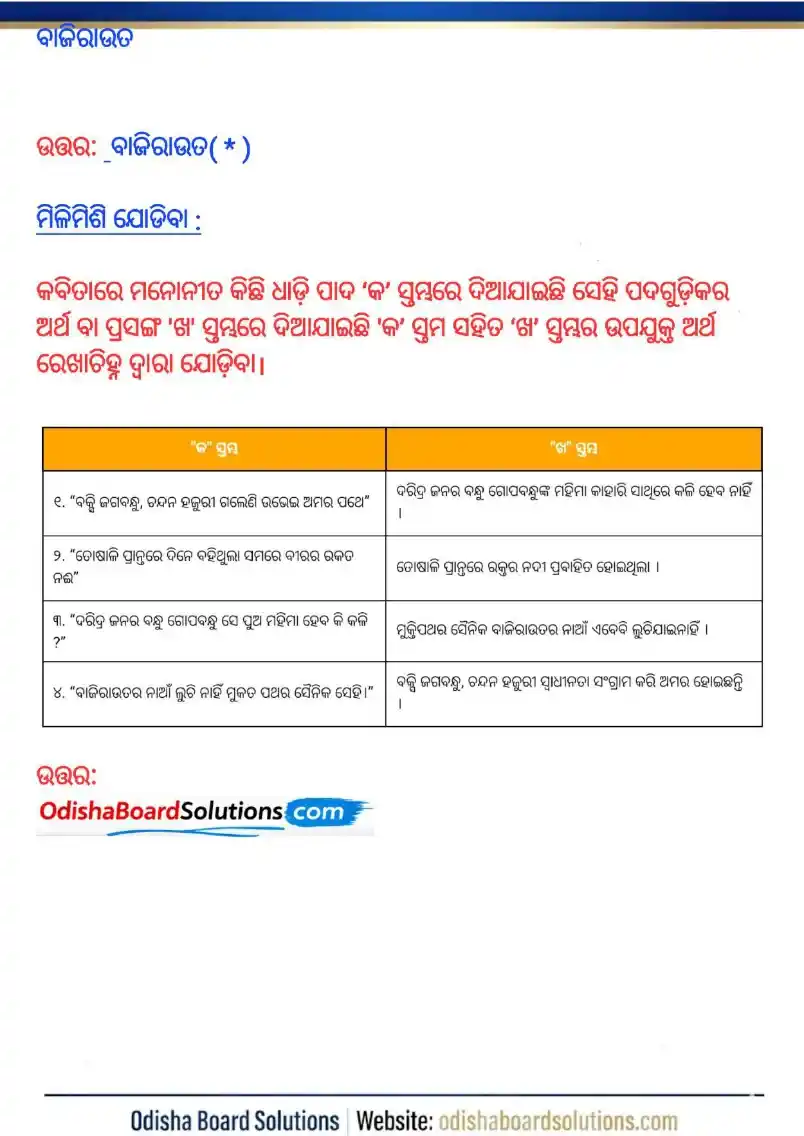
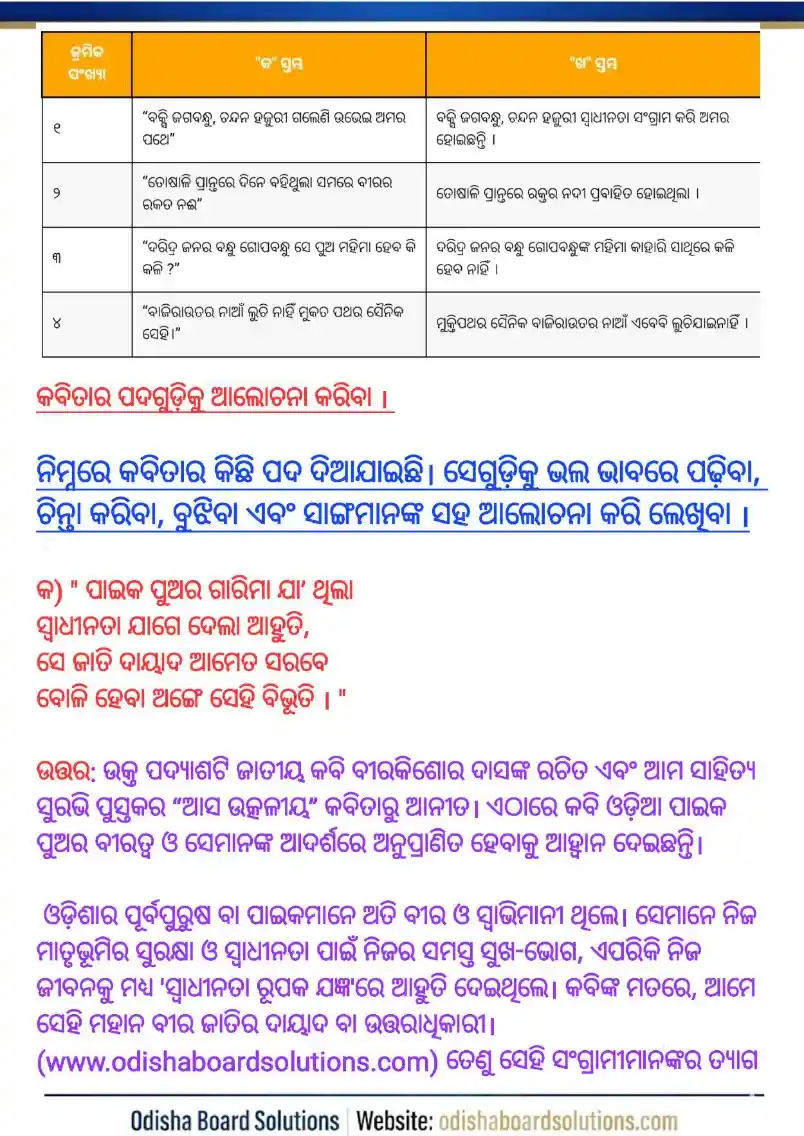
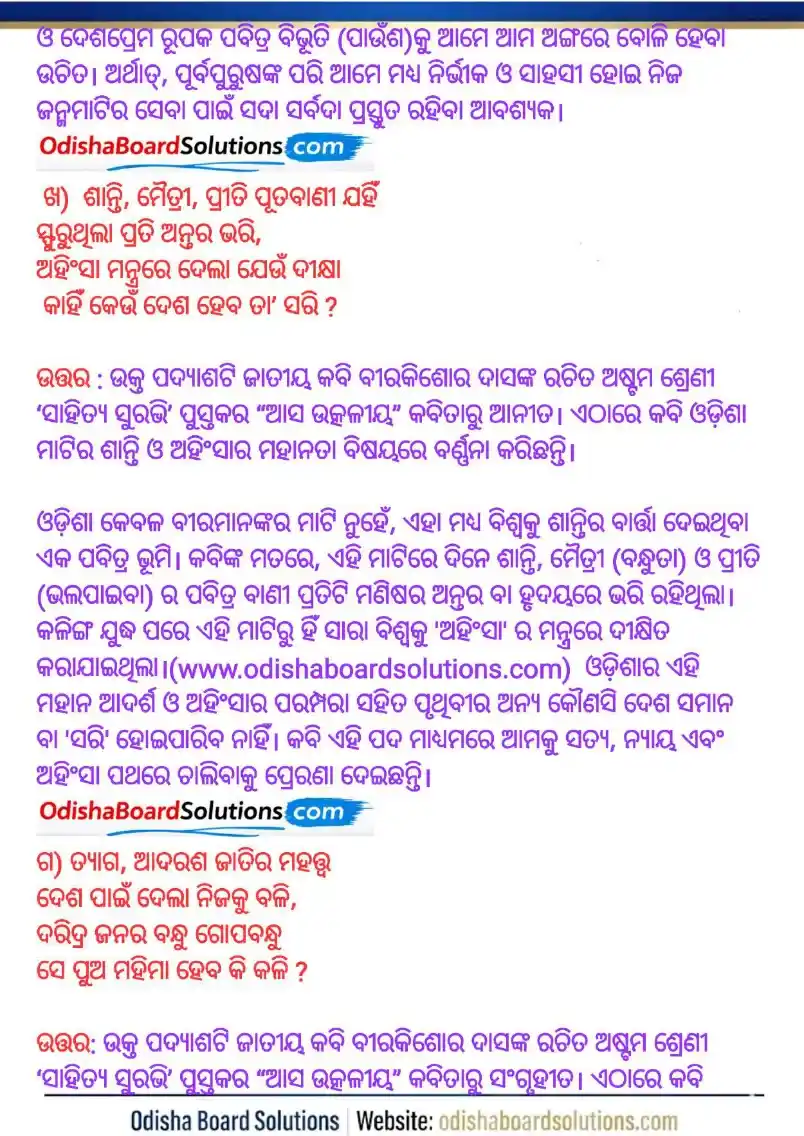

Short Answer Questions
Q: Who are the two specific warriors of the Odia nationalist movement mentioned in the text whose achievements remain memorable?
A: The text mentions Buxi Jagabandhu and Chakhi Khuntia as brave sons and leading warriors of the Odia nationalist movement.
Q: Where did the world-famous Kalinga War take place?
A: The Kalinga War took place on the Toshali plains of ancient Kalinga.
Q: Which river’s water turned red during the Kalinga War, and why?
A: The water of the Daya River turned red due to the blood of hundreds of thousands of Kalinga’s children who fought in the war.
Q: What architectural monument is associated with the story of Dharmapada?
A: The Konark Sun Temple is associated with the story of Dharmapada.
Q: How old was Baji Rout when he became a martyr?
A: Baji Rout was a mere twelve years old.
Medium Answer Questions
Q: Why does the poet want the people of Odisha to remember their ancestors?
A: The poet reminds the people of Odisha about their ancient glory and magnificent history to ignite the fire of patriotism, awaken a revolutionary consciousness, and instill a deep sense of national pride within the modern descendants of these brave heroes.
Q: How did the Paikas show their commitment to the nation’s freedom?
A: The Odia Paikas (soldiers) showed their commitment by sacrificing their lives like ritual offerings in a Yajna (a holy fire ritual) to protect the freedom of their motherland.
Q: What is the primary objective of the poem mentioned in the text?
A: The primary objective of the poem is to awaken a revolutionary consciousness and a strong sense of national pride in the minds of the Odia people by reminding them of their rich heritage.
Long Answer Questions
Q: Explain the transformation of Emperor Ashoka as described in the passage.
A: Emperor Ashoka of Magadha invaded Kalinga, leading to a brutal life-and-death struggle by Kalinga’s army and ordinary citizens. The sheer horror and immense bloodshed of the war—which literally turned the Daya River red—deeply moved the Emperor. Witnessing this devastation transformed him from ‘Chandashoka’ (Ashoka the Fierce), a ruler driven by imperialist violence, into ‘Dharmashoka’ (Ashoka the Righteous), a ruler who renounced violence and embraced Buddhism and non-violence. The text notes that such a radical transformation is incredibly rare in world history.
Q: Describe the ultimate sacrifices made by Dharmapada and Baji Rout as highlighted in Odia history.
A: The text highlights both young boys as immortal icons of selflessness:
- Dharmapada was a young boy who successfully completed the crown (Chuli) of the Konark Sun Temple. To save the lives of twelve hundred artisans who faced execution if the temple wasn’t finished, he selflessly jumped into the sea.
- Baji Rout was a 12-year-old boatman and freedom fighter. He courageously stood his ground against British soldiers, refusing to ferry them across the river. He smiled as he took bullets to his chest, sacrificing his life to stop the enemy from crossing.