Get Class 8 Odia Sahitya Surabhi Chapter 3 Question Answer (“ଶପଥ” / Sapatha). These Question Answer, updated for 2026-27, Which help you score higher in your Class 8 MIL Odia exams.
Odisha Board Class 8 Sahitya Surabhi Chapter 3 Sapatha Question Answer – ODIA

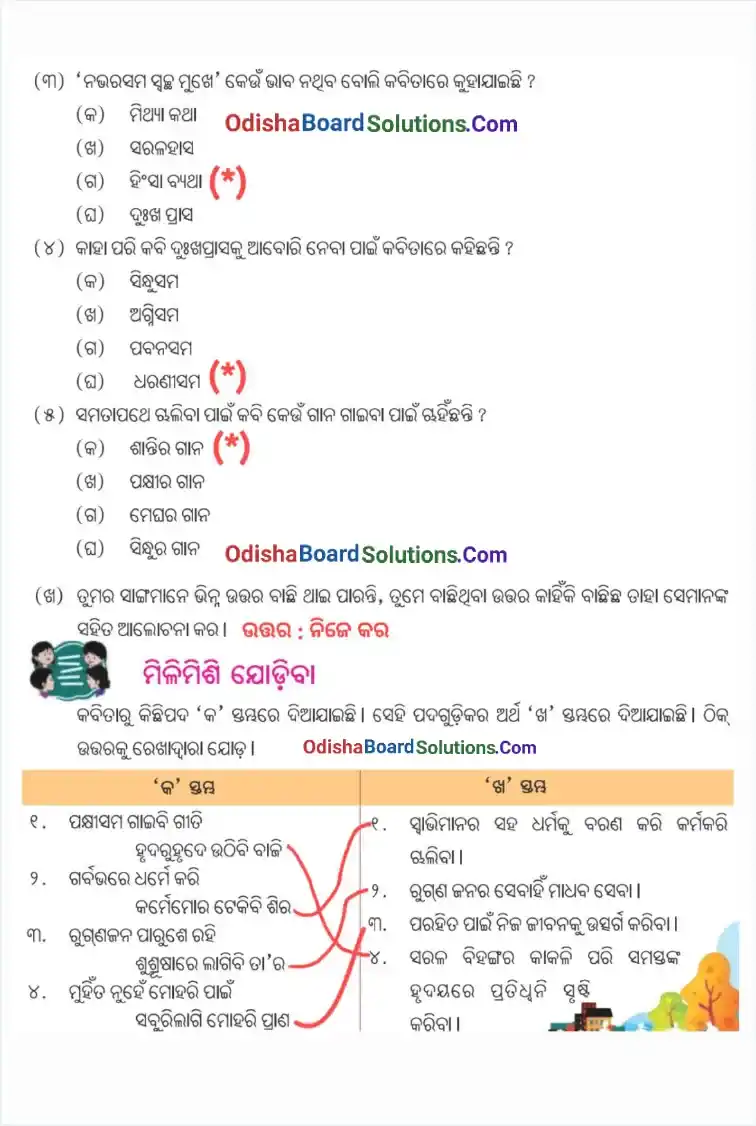
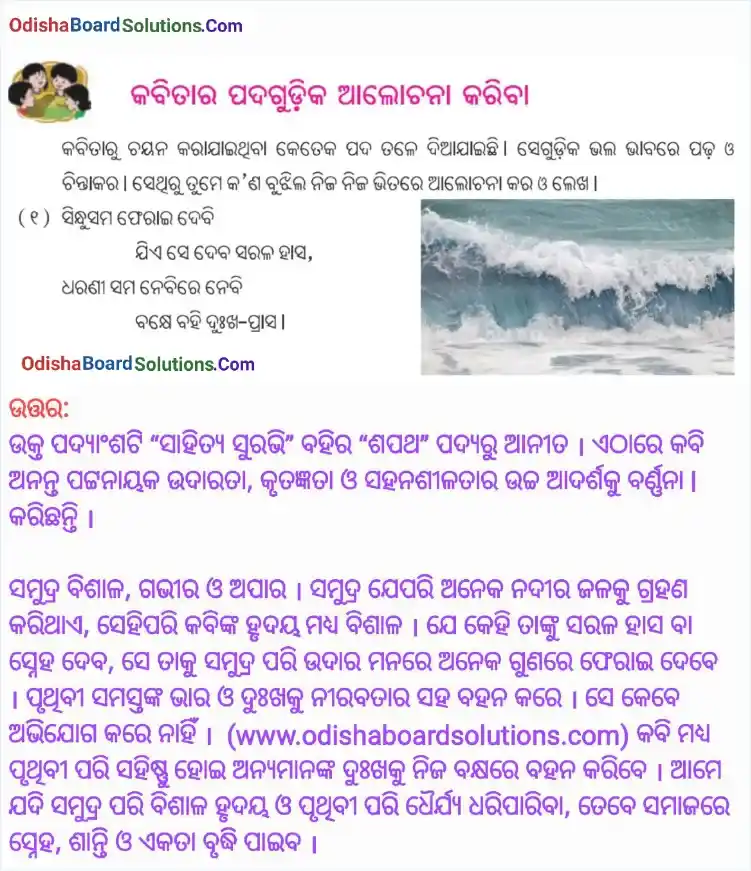
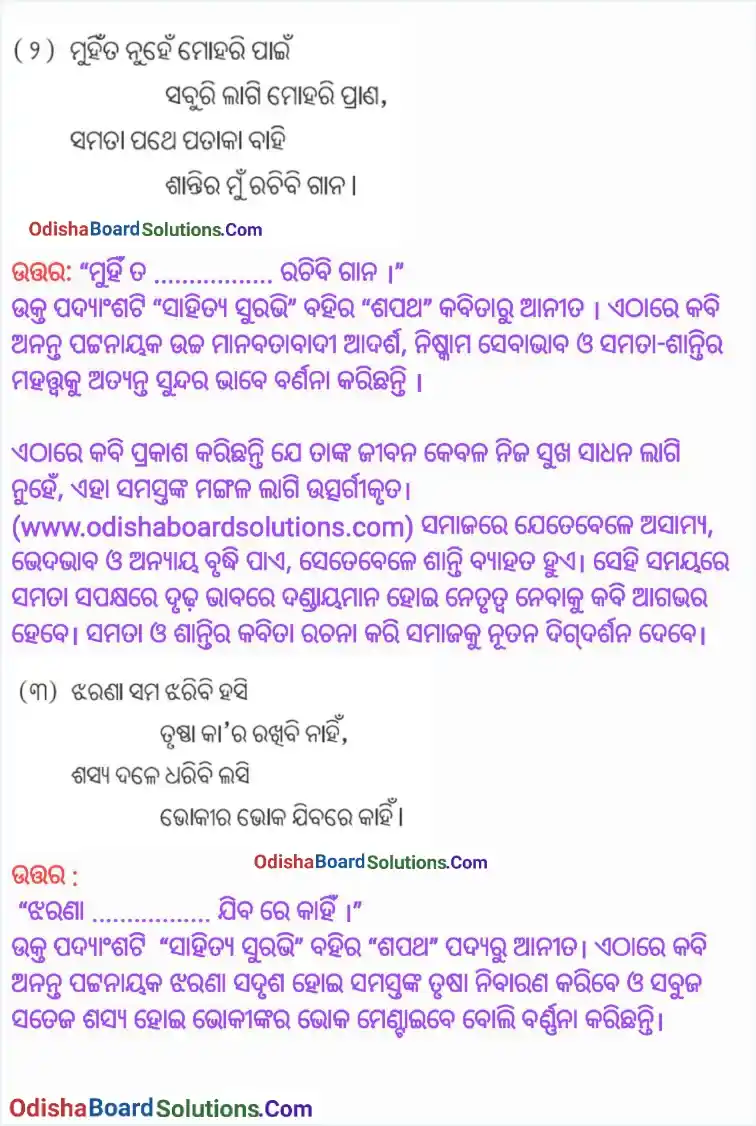



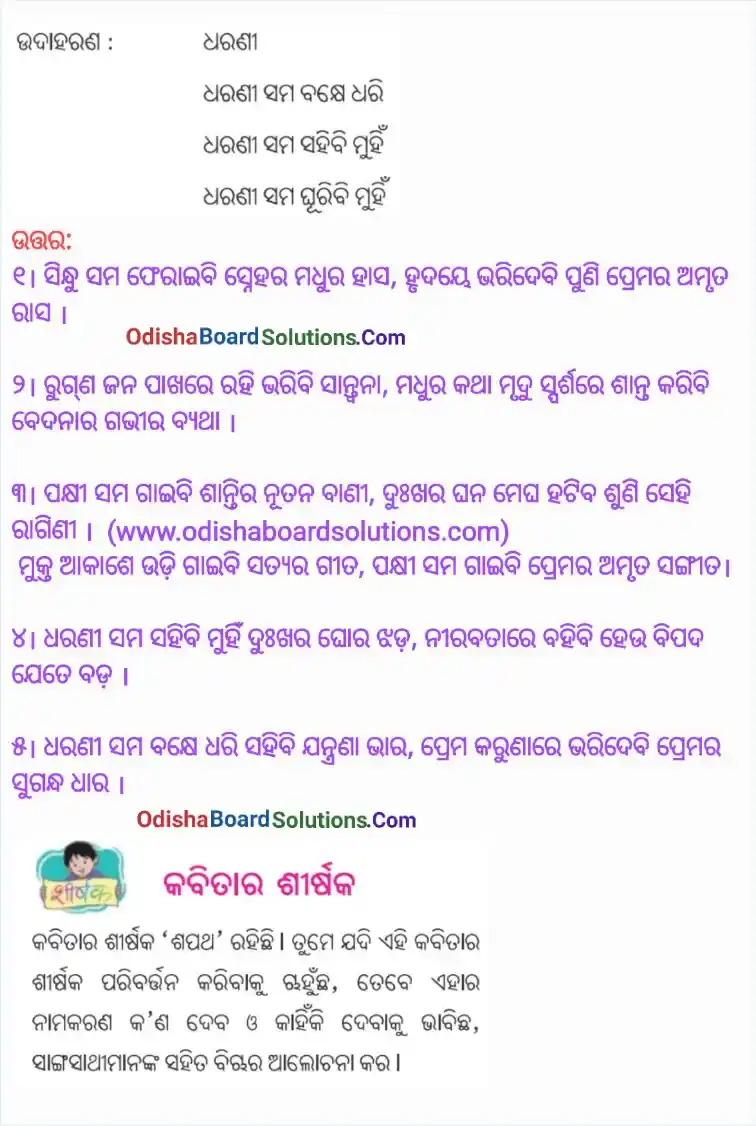

Sapatha Question Answer
Q: What political or philosophical consciousness inspires the poet in this text?
A: The poet is inspired by a communist consciousness to eliminate social inertia, malice, and jealousy.
Q: What does the act of ‘burning’ symbolize in the first paragraph?
A: ‘Burning’ signifies the sacred symbol of sacrifice and dedication.
Q: How does the poet wish to reach out to everyone while remaining invisible like the wind?
A: The poet expresses a commitment to reach out to everyone with his generous thoughts and affection.
Q: To what flower does the poet compare himself to describe remaining pure amidst corruption?
A: The poet compares himself to a lotus flower, which remains pure and untainted even while living in the mud.
Q: What does the poet consider to be the “highest duty of life”?
A: The highest duty of life is considered to be serving the sick and the sorrowful.
Class 8 Sapatha Question Answer
Q: How does the poet plan to deal with the falsehood of selfish people?
A: The poet compares himself to fire, which burns away impurities to make things sacred. Similarly, he intends to use this fiery resolve to completely burn away the falsehood of selfish people.
Q: What is the poet’s core objective, and what metaphor does he use to describe his role in achieving it?
A: His core objective is to establish equality and peace in society. He describes himself as a “flag-bearer” who hopes to spread the ideal of equality everywhere to build a peaceful world.
Q: How does the poet intend to support the downtrodden, oppressed, and helpless?
A: The poet is determined to act as visual sight for the blind and a walking stick for the helpless. By deeply feeling the pain of the downtrodden and oppressed, he declares that he will become their voice.
Sapatha Class 8 Question Answer : Long Answer Questions
Q: How does the poet use elements of nature (Sun, Moon, Stream, Mountain, Ocean, Earth) to explain his vision for humanity?
A: The poet systematically adopts the best traits of different natural elements to illustrate the ultimate examples of humanity:
- The Sun & Moon: Like the sun, he will burn through hardships to illuminate the world, but like the moon, he will soothe society with calm rays.
- A Flowing Stream: He wishes to benefit everyone with a joyful smile, flowing like a stream.
- A Mountain: He vows to remain unshakable and patient, standing firm on the path of justice even if dangers strike like a thunderbolt.
- The Ocean: He aims to keep a heart as vast as the ocean to accept love and return it many times over.
- The Earth: Mirroring the Earth, which silently carries the weight of everything, the poet wishes to practice ultimate tolerance by bearing the grief and burdens of others.