Get Class 8 Odia Sahitya Surabhi Chapter 4 Question Answer (“ଡମକଚ୍” / Damkach). These Question Answer, updated for 2026-27, Which help you score higher in your Class 8 MIL Odia exams.
Odisha Board Class 8 Sahitya Surabhi Chapter 4 Damkach Question Answer – ODIA
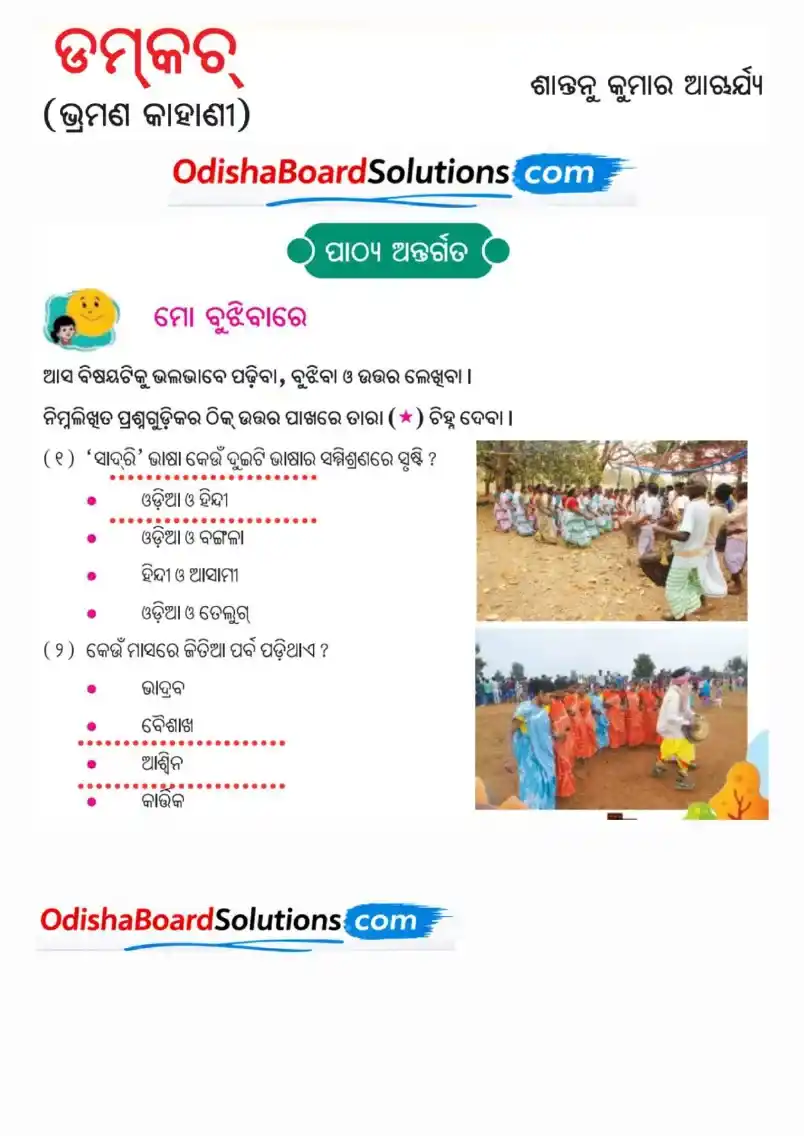
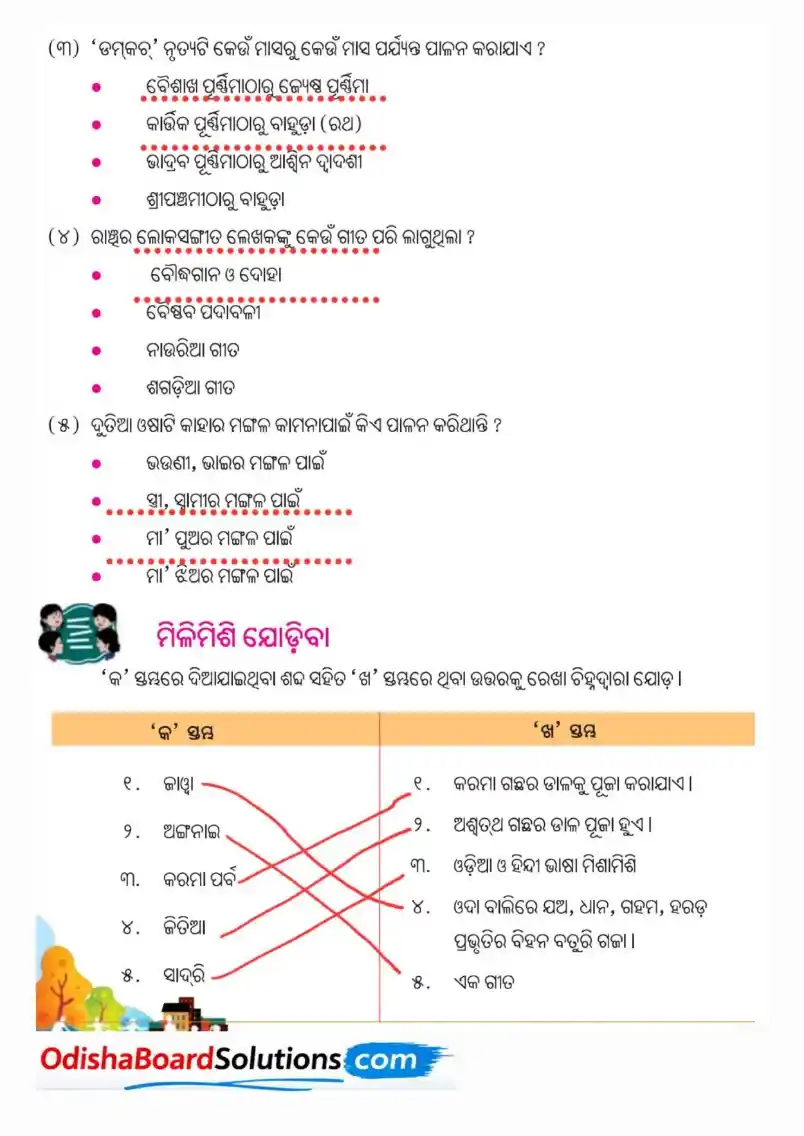
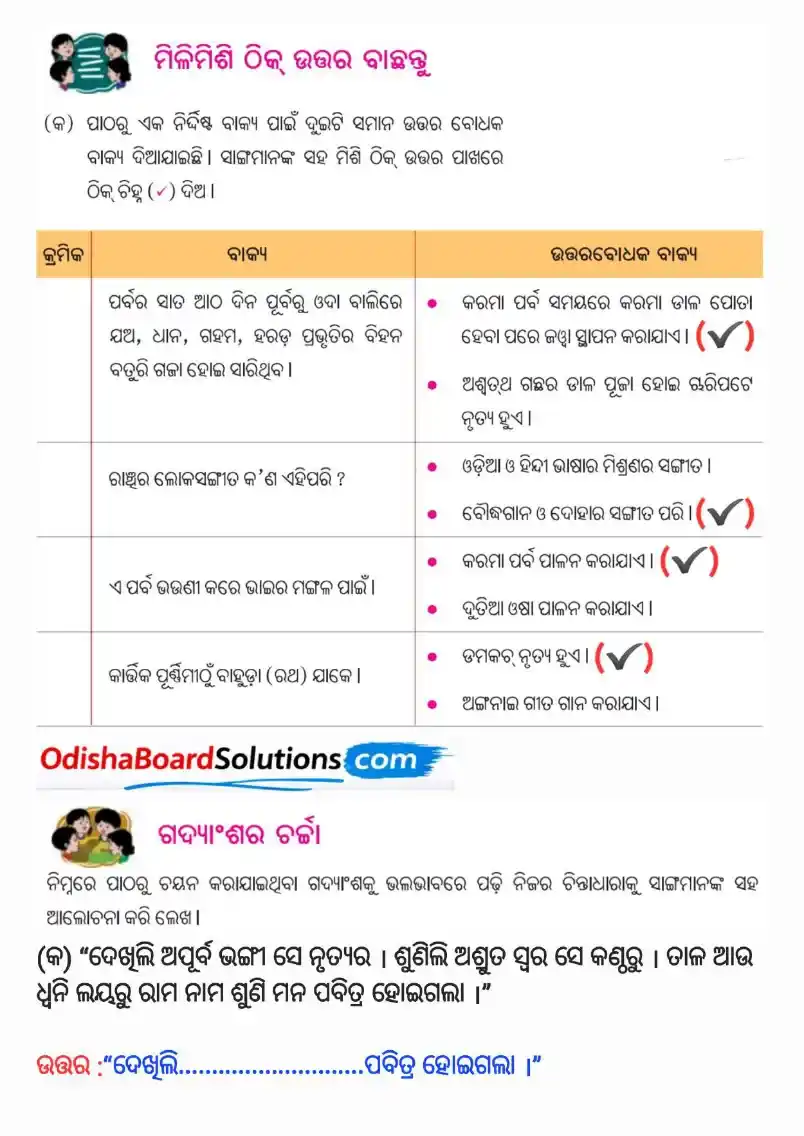
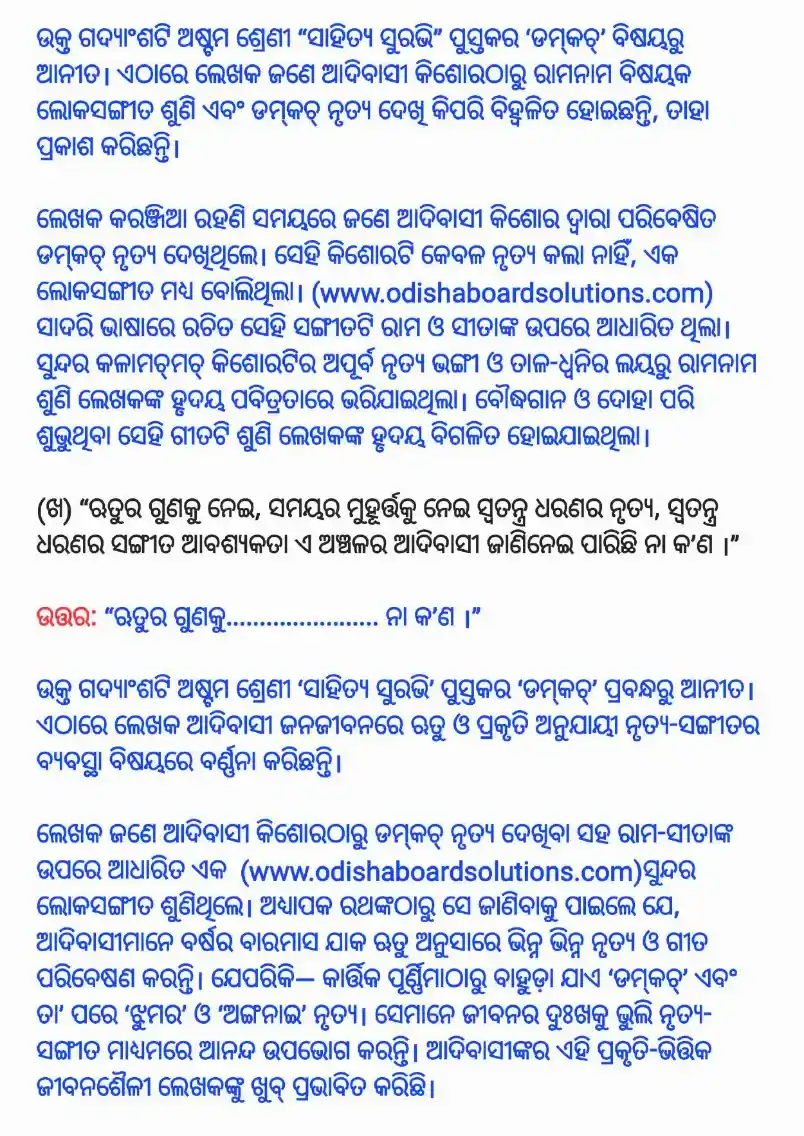

Short Answer Questions
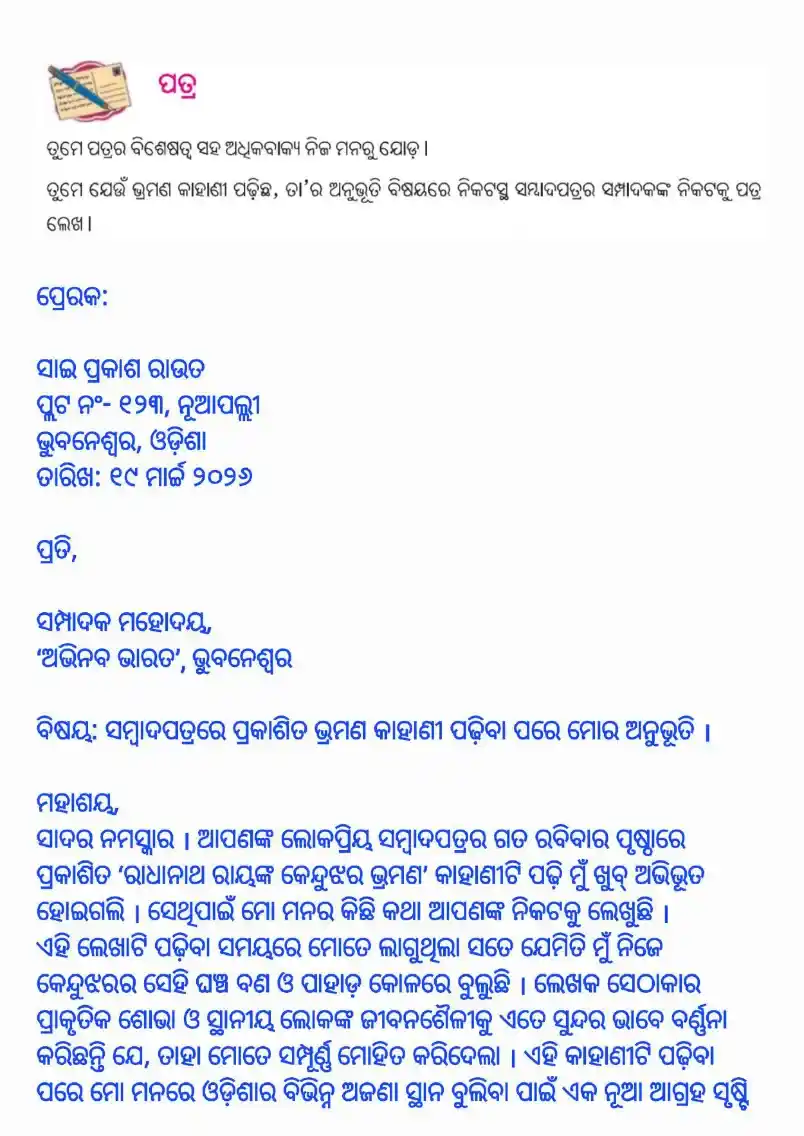
Q: In what style or format is this text written?
A: The text is written in the style of a conversation between the author and one of his colleagues.
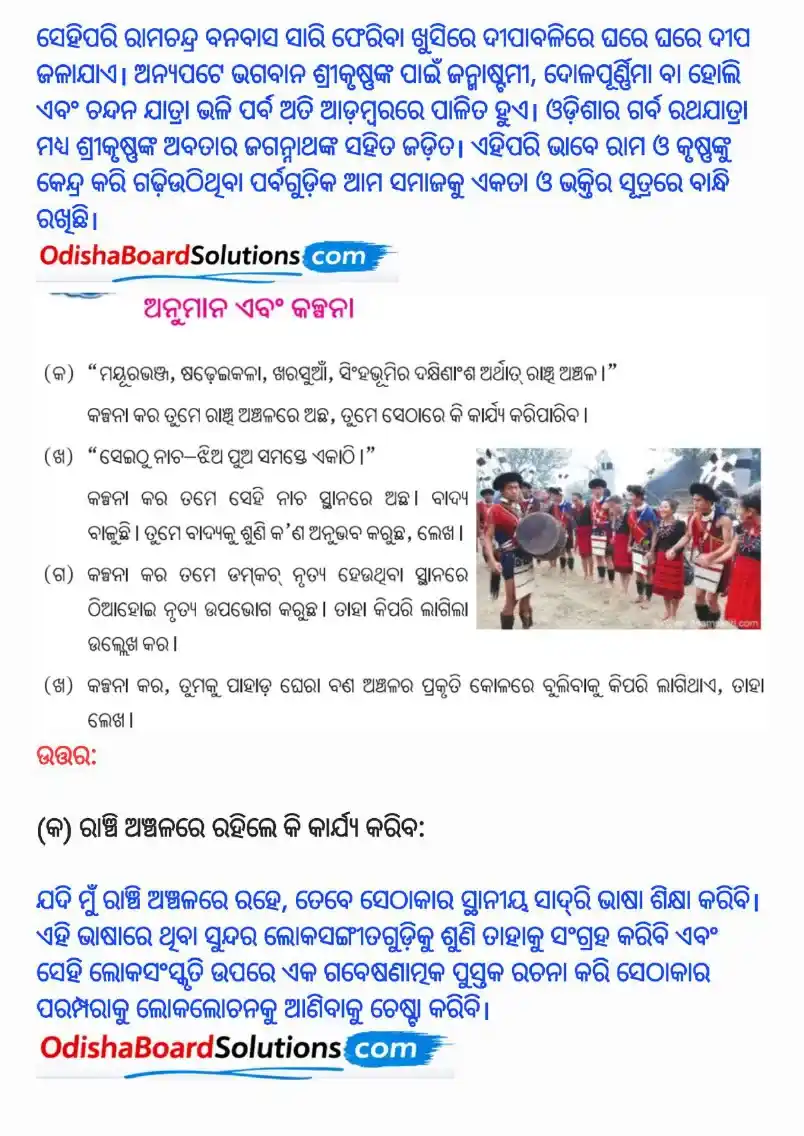
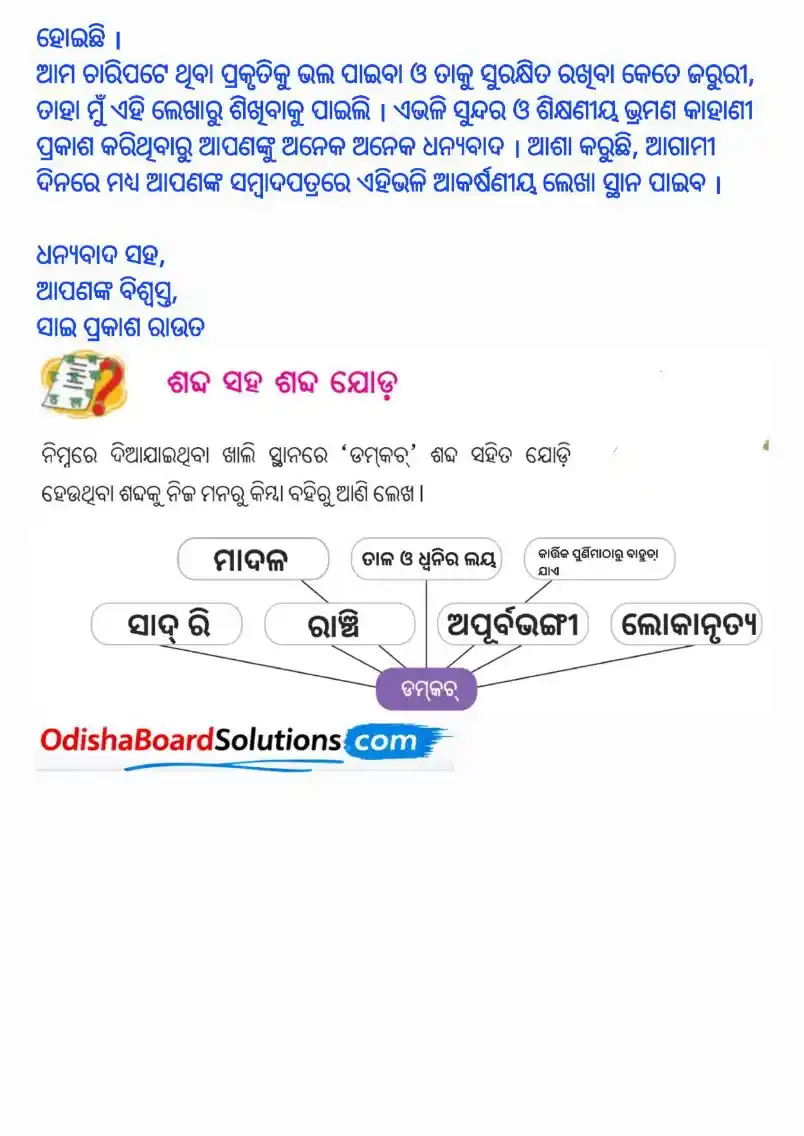
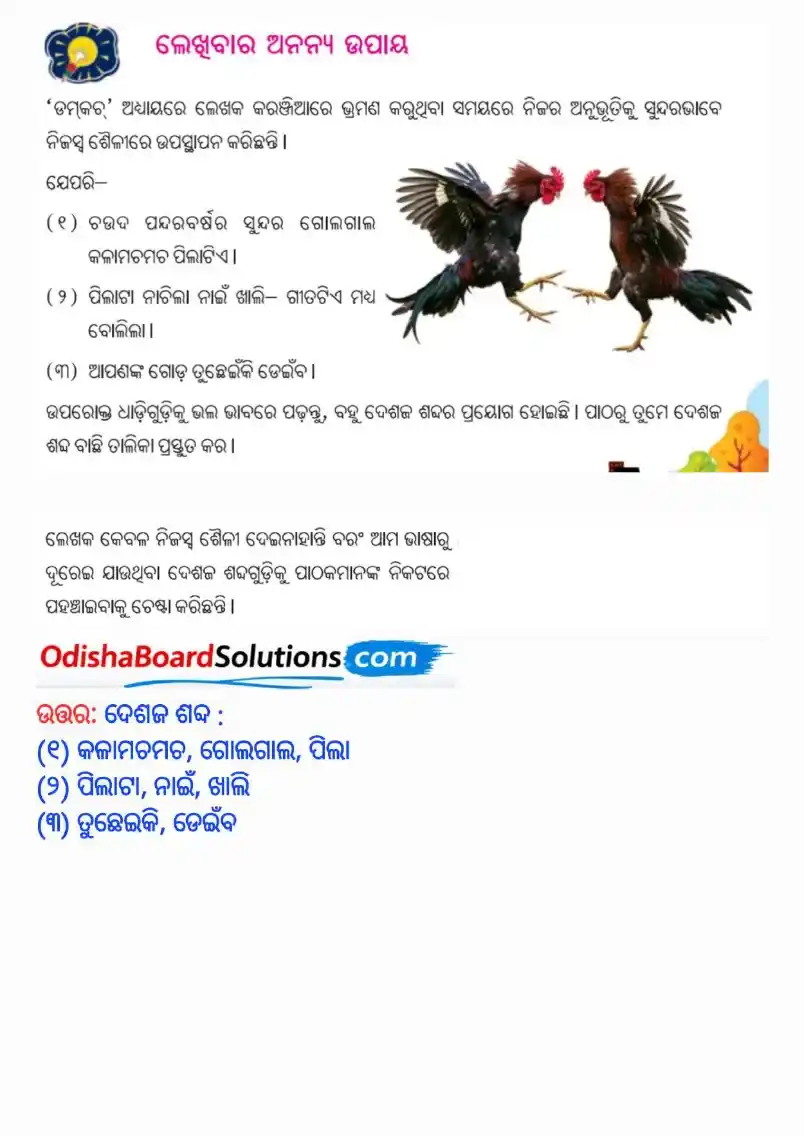
Q: Who performs the Domkach dance witnessed by the author, and what language are the accompanying songs sung in?
A: The Domkach dance was performed by a fourteen-to-fifteen-year-old boy, and the songs about Rama and Sita were sung in the Sadri language.
Q: On which specific day is the Karma festival celebrated, and which communities participate?
A: It is celebrated on the day of Bhadrava Shukla Ekadashi. It is celebrated by tribal groups such as the Ho, Munda, and Oraon, as well as the Mahanta community.
Q: During the Jitia festival, what tree branch is worshipped instead of the Karma tree, and who observes it?
A: A branch of the Peepal tree (Ashwatha) is worshipped. Mothers observe this festival for the well-being of their sons.
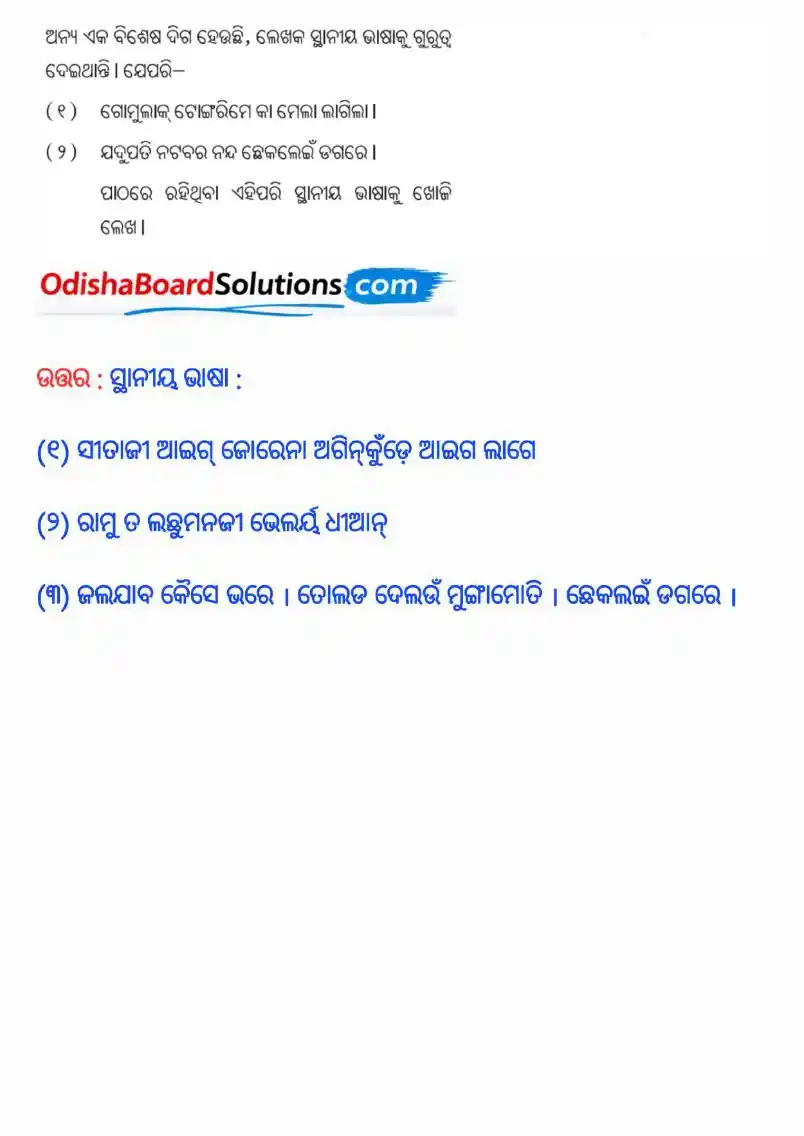
Q: According to the ‘Anganai’ song sung by the colleague, who is blocking the path to the water?
A: Yadupati Natabara Krishna is blocking the path.
Medium Answer Questions
Q: What is the “Jawa” ritual arrangement, and how is it prepared?
A: The Jawa is a sacred ritual arrangement prepared seven to eight days before the Karma festival. Seeds of barley, paddy, wheat, horse gram, and other grains are sprouted in wet sand inside a bamboo basket (Changudi). It is then beautifully decorated with garlands made of cucumber, ridge gourd, and wild flowers.
Q: How do unmarried girls and childless women participate in the core Karma Puja rituals?
A: They arrive at the worship site holding individual cucumbers wrapped in turmeric-stained cloth. After a Brahmin priest reads a scriptural myth explaining the festival’s significance, the women hold their ritual cucumbers and circle the Karma worship site seven times before returning home to eat.
Q: What profound realization does the author have regarding the names of Rama and Krishna in Indian culture?
A: The author realizes that India continues to thrive by keeping the names of Rama and Krishna as its spiritual chanting beads (Japamali). He observes that all aspects of tribal life—including songs, dances, and local drinks like Handia and Mahula—are ultimately surrendered at the feet of these two divine names, defining the core of Indian civilization.
Long Answer Questions
Q: Describe the step-by-step sequence of events during the Karma Puja celebration as witnessed in the village.
A: The celebration follows a precise community sequence:
- First, a branch of the Karma tree is cut from the forest, brought to the village, and planted next to the pre-prepared Jawa basket.
- Unmarried and childless women arrive carrying turmeric-stained cloth bundles containing cucumbers.
- A Brahmin priest reads aloud the traditional legends of the Karma Puja to the gathered community.
- The women circumambulate the planted branch seven times, complete their prayers, and head home for their meals.
- Nightfall marks the transition to collective celebration, where the young men and women dance together all night long to the rhythmic beats of the traditional Madal drum.
Q: What does the text reveal about the tribal philosophy toward life and its relationship with nature?
A: The text reveals that tribal communities view life not as a “storehouse of sorrow,” but inherently as a source of joy. They do not separate their existence from the natural world; instead, their diverse songs, dances, and festival calendar are organically integrated into the shifting moods of the seasons. By transforming natural elements—like tree branches, grain sprouts, and wild river flowers—into central objects of worship, they celebrate a harmonious cycle of life, community unity, and spiritual devotion.