Here Class 7 Odia Sahitya Suman Chapter 1 Question Answer (“କଳାମାଣିକରେ” / Kalamanikare). These Question Answer, updated for 2026-27, Which help you score higher in your Class 7 MIL Odia exams.
Odisha Board Class 7 Sahitya Suman Chapter 1 Kalamanikare Question Answer – ODIA
Class 7 Odia Kalamanikare Short Questions Answer
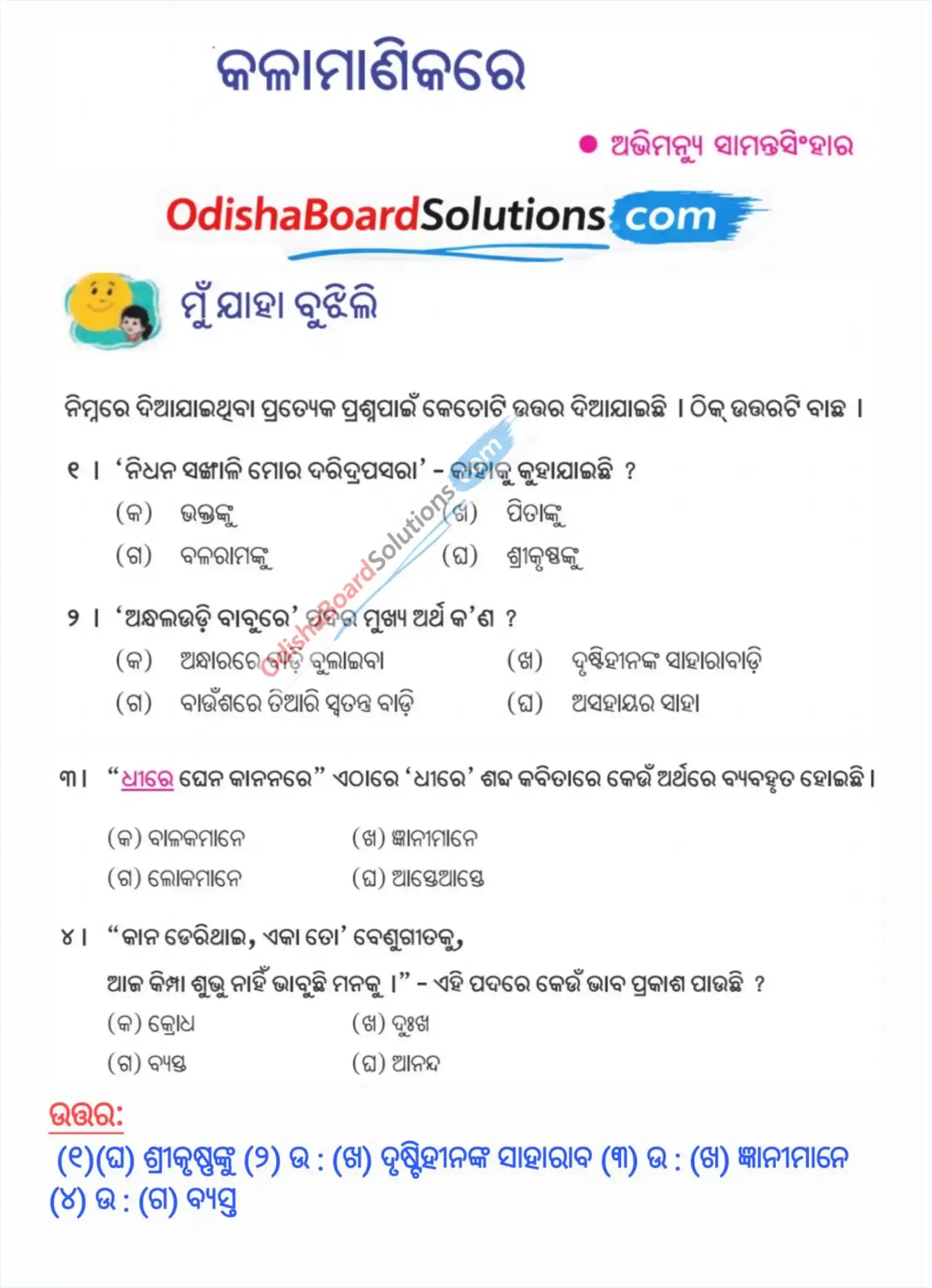
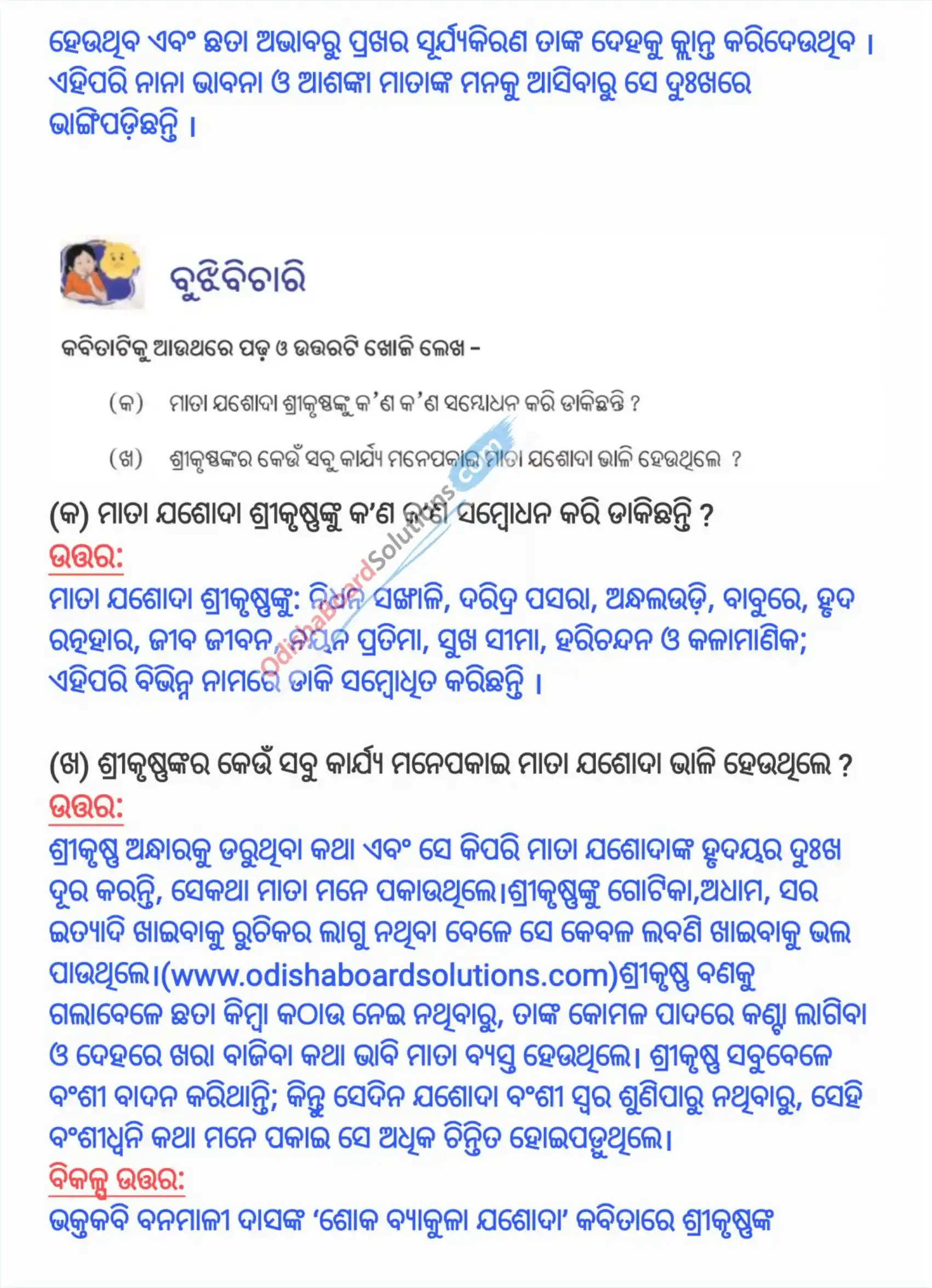
Q: What does the term “Kala Manika” literally mean, and who does it refer to in this poem?
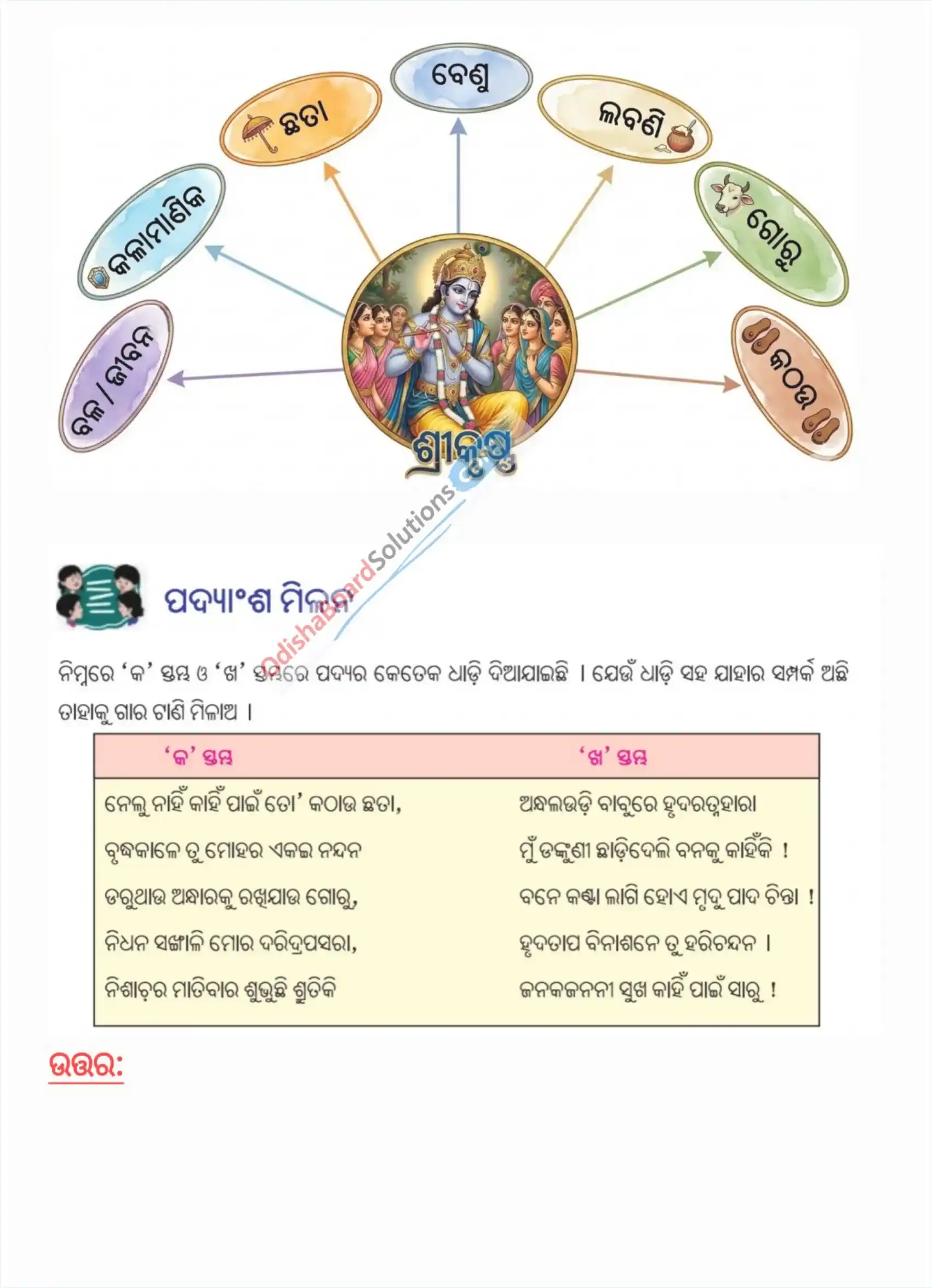
A: “Kala Manika” literally means a rare, precious black gemstone. In this poem, Mother Yashoda uses it as a term of endearment for her beloved son, Sri Krishna.
Q: Why is Mother Yashoda weeping and anxious in the opening stanza?
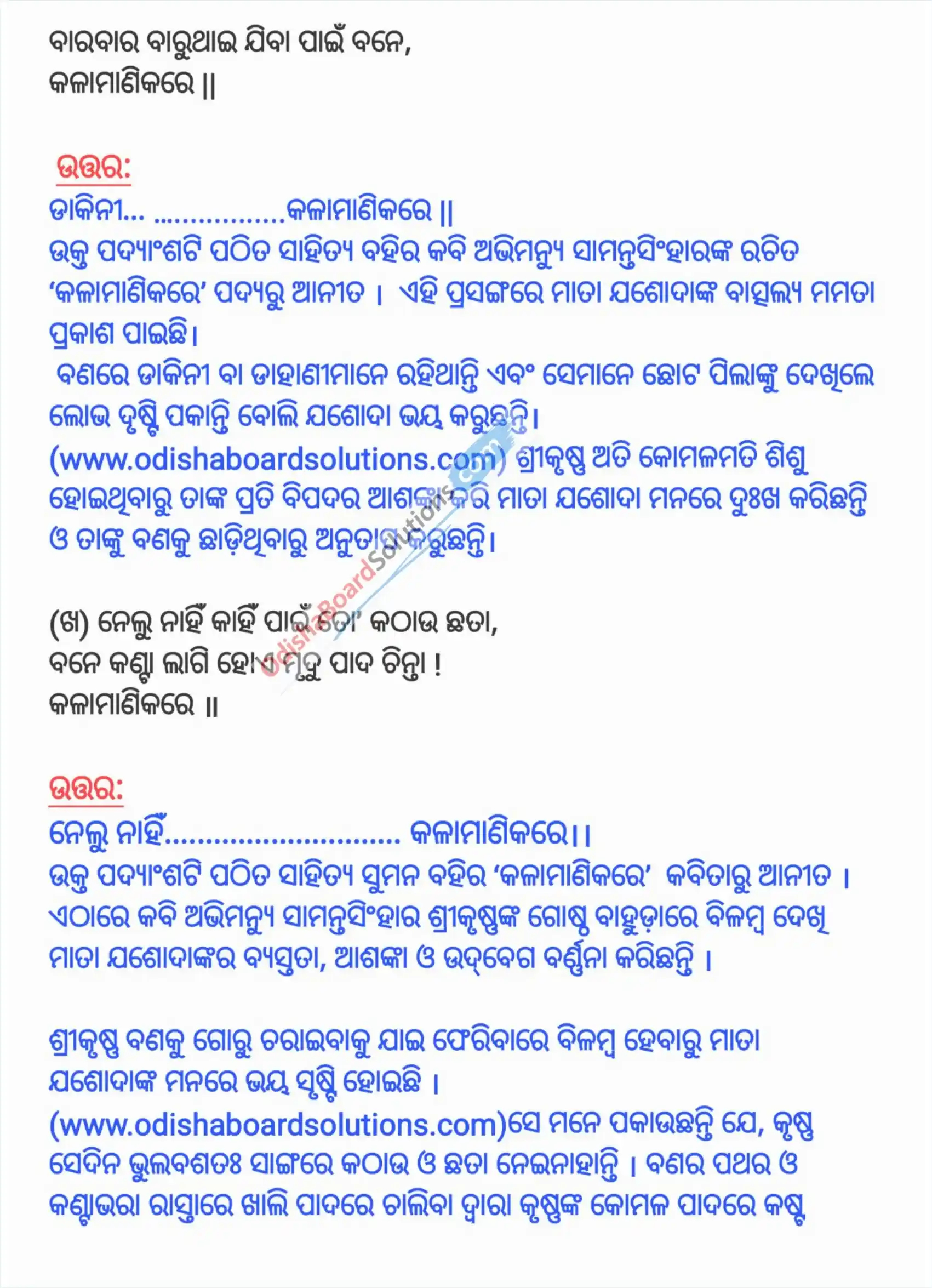
A: She is anxious because the day has ended and evening has set in, yet Sri Krishna has not yet returned home from the forest where he went to graze the cows.
Q: What delicious household sweets does Sri Krishna refuse to eat, according to Mother Yashoda?
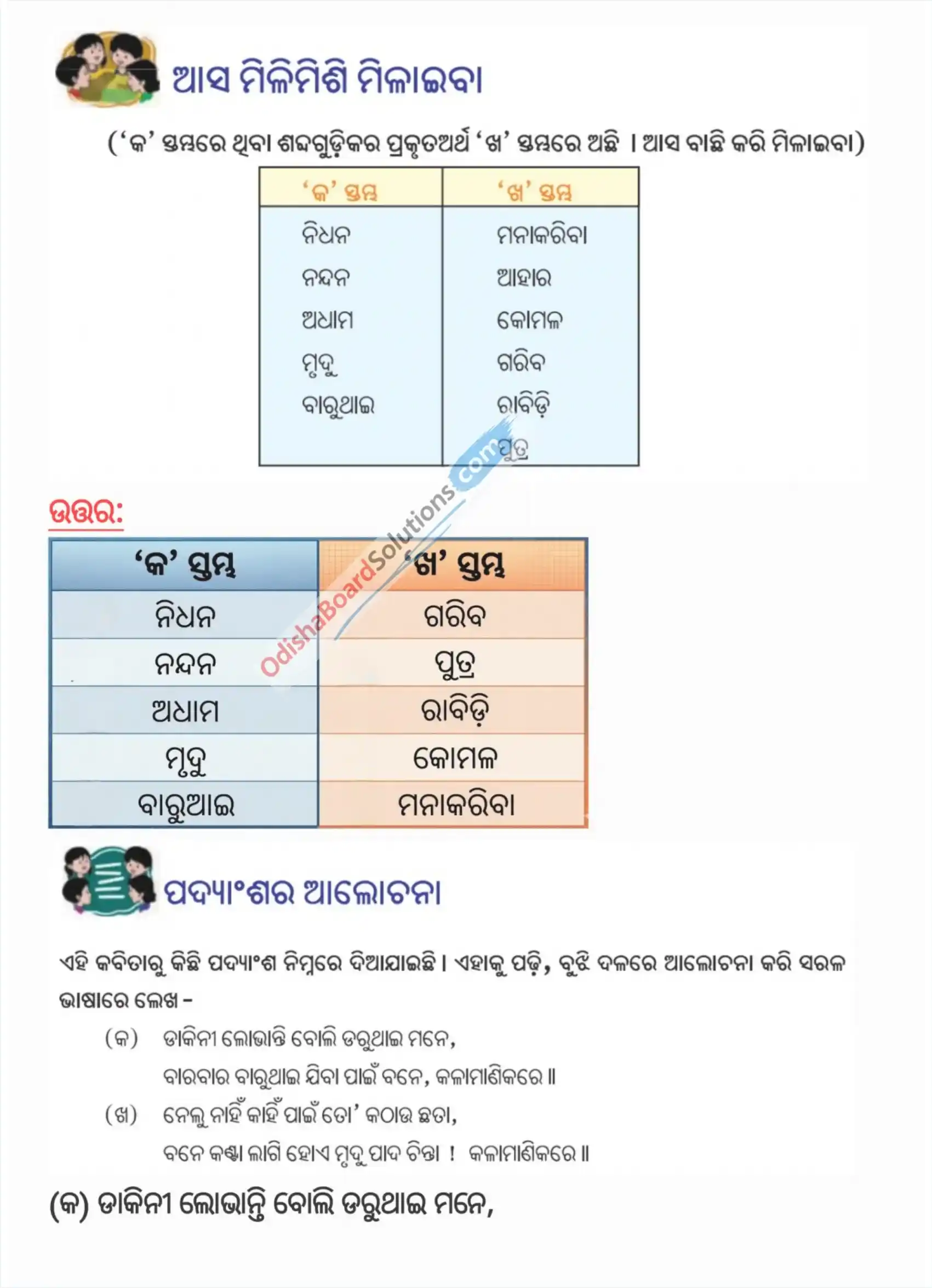
A: He refuses to eat Gotika (a type of traditional sweet), Adhama (rabidi/condensed milk), and Sara (milk cream).
Q: What did Sri Krishna fail to take with him to the forest that is causing Yashoda to worry about his feet?
A: He did not take his Khatau (traditional wooden footwear/clogs) or an umbrella (Chhata), leading her to worry that sharp forest thorns are piercing his tender feet.
Q: What specific sound does Mother Yashoda eagerly listen for every evening?
A: She listens for the sweet melody of Sri Krishna’s flute playing (Benu Geeta), which signals his return from the forest.
Kalamanikare Class 7 Questions Answer
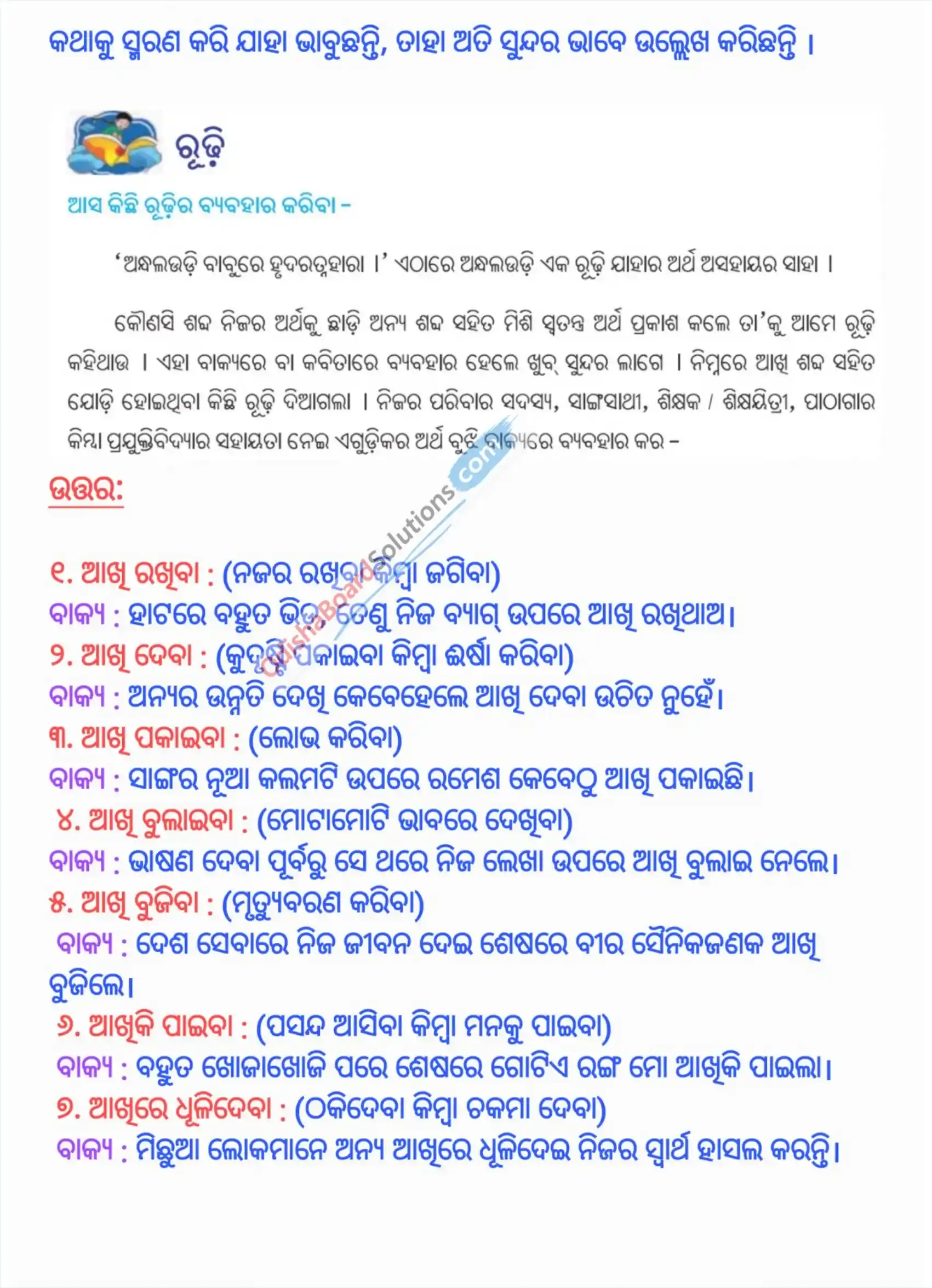
Q: Explain the meanings of the metaphors “Andha Laudia” and “Nidhara Sankhali” as used by Yashoda.
A: Yashoda uses these profound metaphors to illustrate how central Krishna is to her existence:
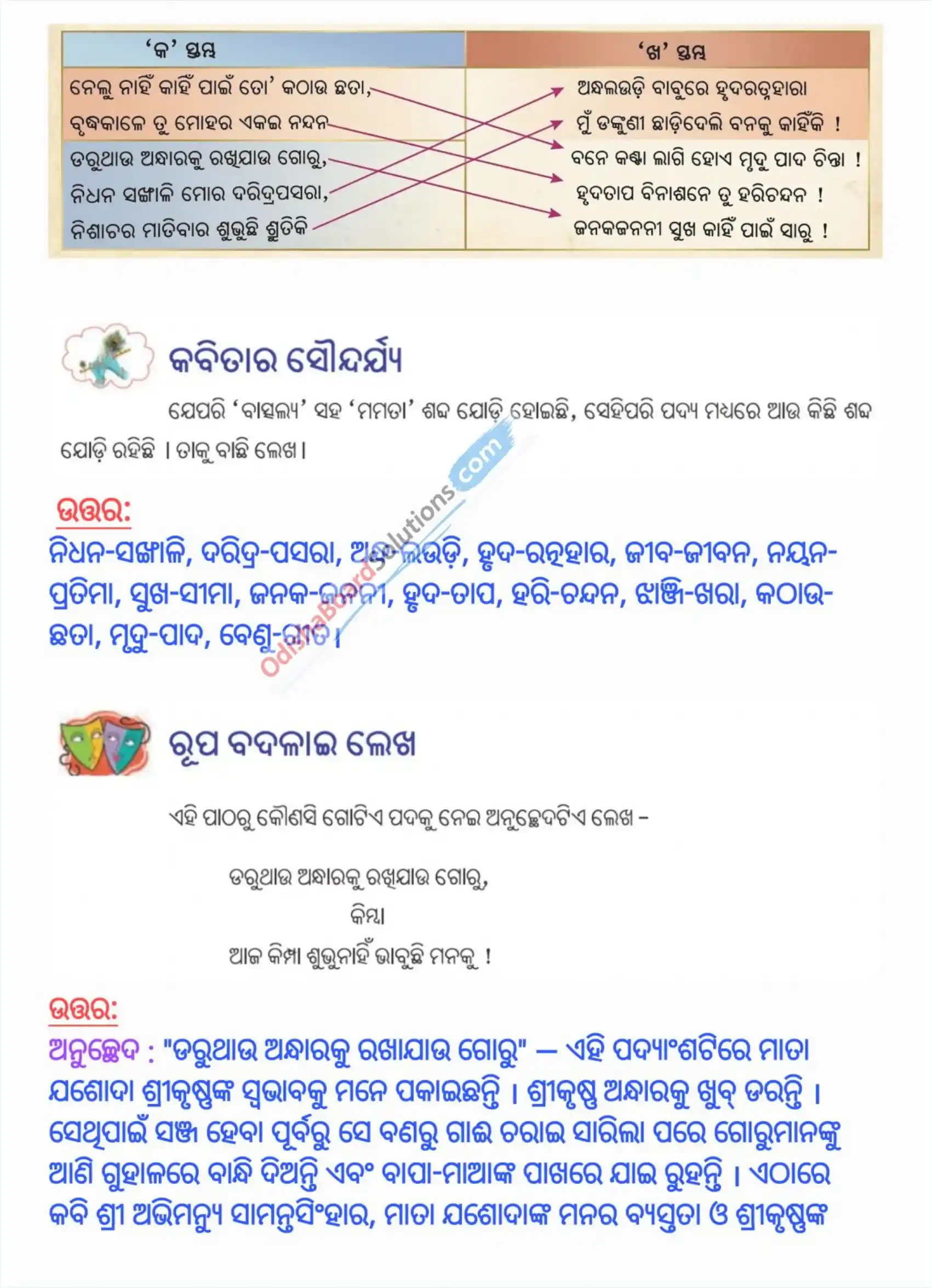
- Andha Laudia (An blind man’s walking stick): Just as a walking stick is the absolute support for a blind person, Krishna is her sole support in her old age.
- Nidhara Sankhali / Daridra Pasara (A poor person’s wealth): Krishna is the single, most precious treasure of his otherwise poor mother.
Q: What childhood tantrum or playful behavior (Balya Leela) of Krishna does Yashoda recall?
A: She fondly remembers that even though he rejects premium sweets like rabidi and milk cream, he will dance beautifully and put on an adorable tantrum (Lancha/Ali) just to get a tiny dollop of fresh butter (Labani).
Q: Why does Mother Yashoda mockingly call herself a “Dankuni” (demoness/heartless woman)?
A: In her overwhelming grief and anxiety, she blames herself for being a cruel and heartless mother who allowed her very young, delicate child to venture completely alone into a dangerous forest filled with wild threats.
Kalamanikare Long Questions Answer
Q: Describe the various imaginary fears and scenarios that cross Mother Yashoda’s mind due to Krishna’s delay.
A: As darkness falls and Krishna fails to return, Yashoda’s mind races with highly distressing scenarios born out of deep maternal instinct:
- Fear of the Dark & Monsters: She knows Krishna is privately terrified of the dark, and she can hear the terrifying roars of nocturnal demons (Nishachara) waking up in the forest.
- Fear of Evil Spirits: She remembers how vulnerable children are to witches (Dakini) who lure young kids away with false temptations.
- Physical Exhaustion: She envisions his soft skin dripping with sweat under the scorching daytime heat (Jhanji Khara), picturing him sitting completely exhausted and weak under a random tree canopy (Tarutale).
- Injuries: She painfully visualizes his exceptionally soft feet (Mrudu Pada) getting bloodied and torn by heavy forest thorns because he walked out barefoot.
Q: How does this poem capture the essence of Vatsalya Rasa (maternal love and devotion)?
A: The poem is a textbook masterpiece of Vatsalya Rasa, showcasing how a mother’s love oscillates between pure adoration and intense protective panic. Yashoda views the supreme lord of the universe as an incredibly fragile, helpless infant. To her, his body is so soft that it feels like it will melt (Goli Hoijau) when picked up. The progression from remembering his sweet butter-stealing dances to her frantic listening for his missing flute melody beautifully captures how a mother’s entire universe, peace, and ultimate joy (Sukha Sima) begin and end purely with the safety of her child.