Here Class 7 Odia Sahitya Suman Chapter 3 Question Answer (“ଜାତୀୟ ପକ୍ଷୀ” / Jatiya Pakhi). These Question Answer, updated for 2026-27, Which help you score higher in your Class 7 MIL Odia exams.
Odisha Board Class 7 Sahitya Suman Chapter 3 Jatiya Pakhi Question Answer – ODIA
Jatiya Pakhi Short Question Answer
Q: Who is the poet of “Jatiya Pakhi”, and what are his dates of birth and death? A: The poem was written by Ananta Patnaik, who lived from 1912 to 1987.
Q: For which poetry collection did Ananta Patnaik receive the Central Sahitya Akademi Award, and in which year? A: He received the prestigious award for his book ‘Abantara’ in the year 1981.
Q: From which specific children’s poetry compilation is the poem “Jatiya Pakhi” taken? A: It is taken from the children’s poetry collection titled ‘Sutra tie Sukrutira’.
Q: Name three other prominent poetry collections written by the poet. A: His other representative poetry collections include ‘Raktashikha’, ‘Shantishikha’, and ‘Alodaloda’.
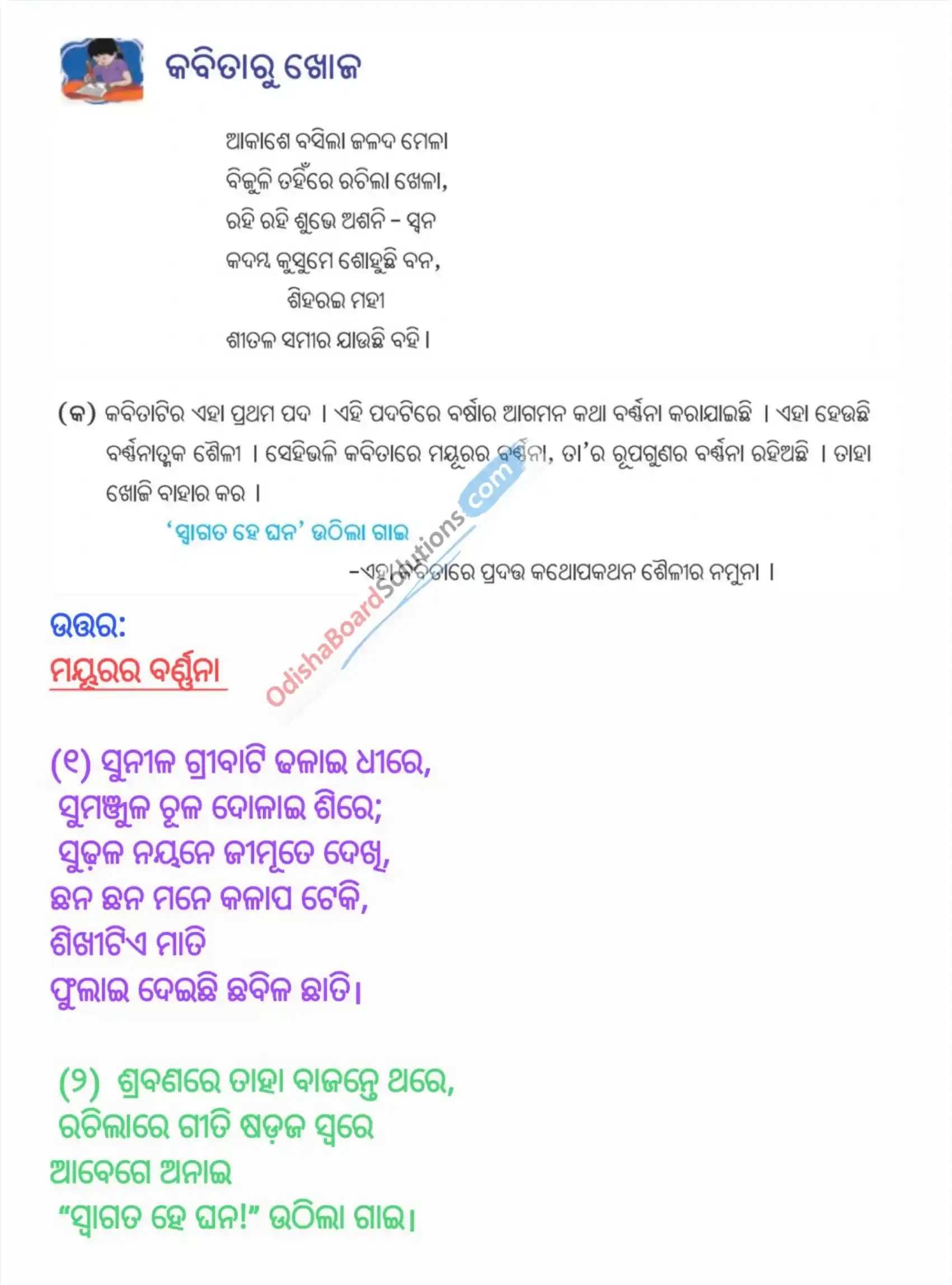
Q: Which flower blooms in the forest to enhance its beauty when clouds gather? A: The Kadamba flower blooms in the forest.
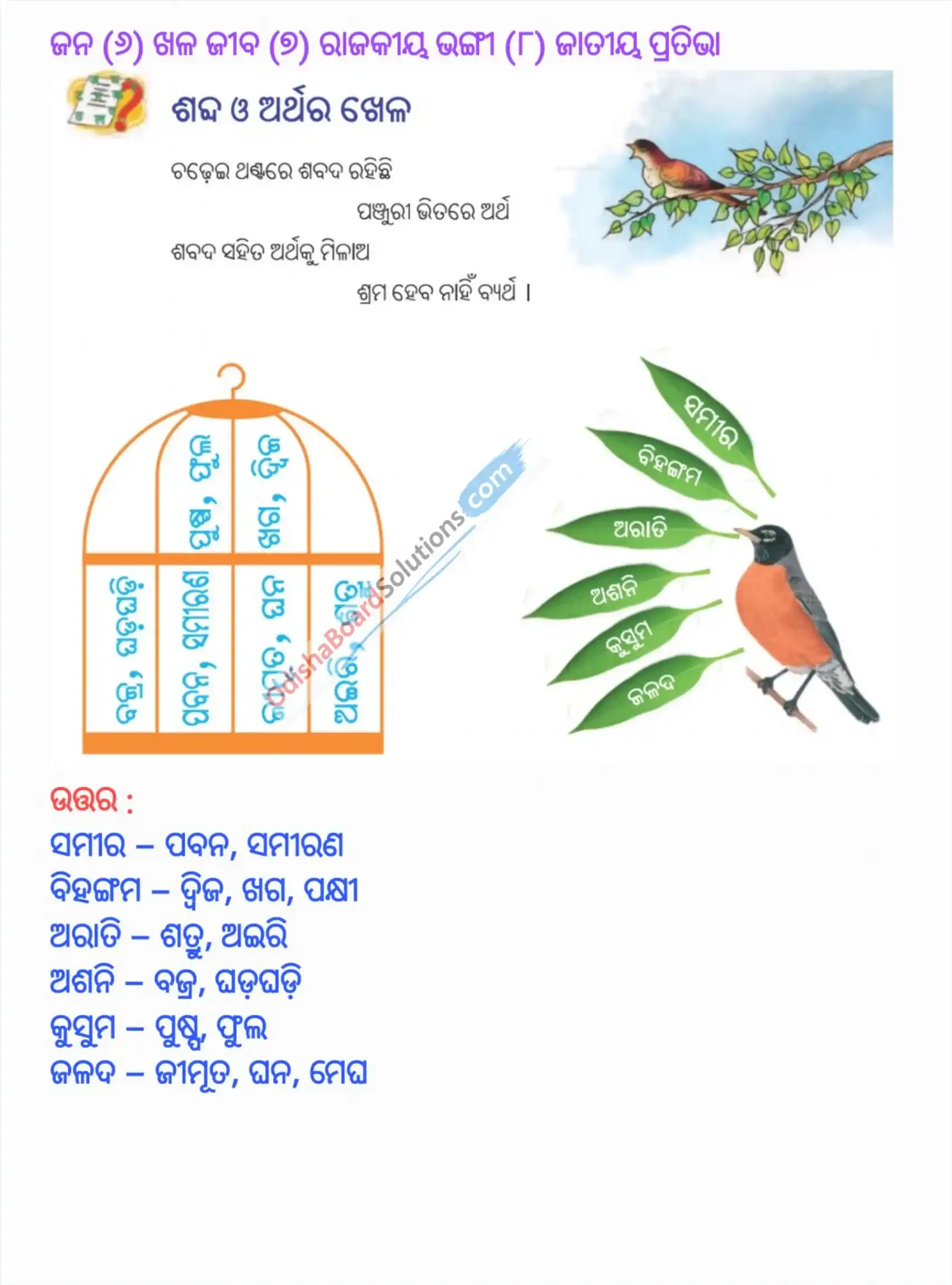
Q: What do the words “Jalada”, “Mahi”, and “Sameera” mean in Stanza 1? A: * Jalada: Cloud
- Mahi: Earth
- Sameera: Wind/Breeze
Q: Which birds become silent out of fear when the lightning strikes and thunder rolls? A: The Pika (Cuckoo), Shuka (Parrot), and Shari (Myna) become completely quiet.
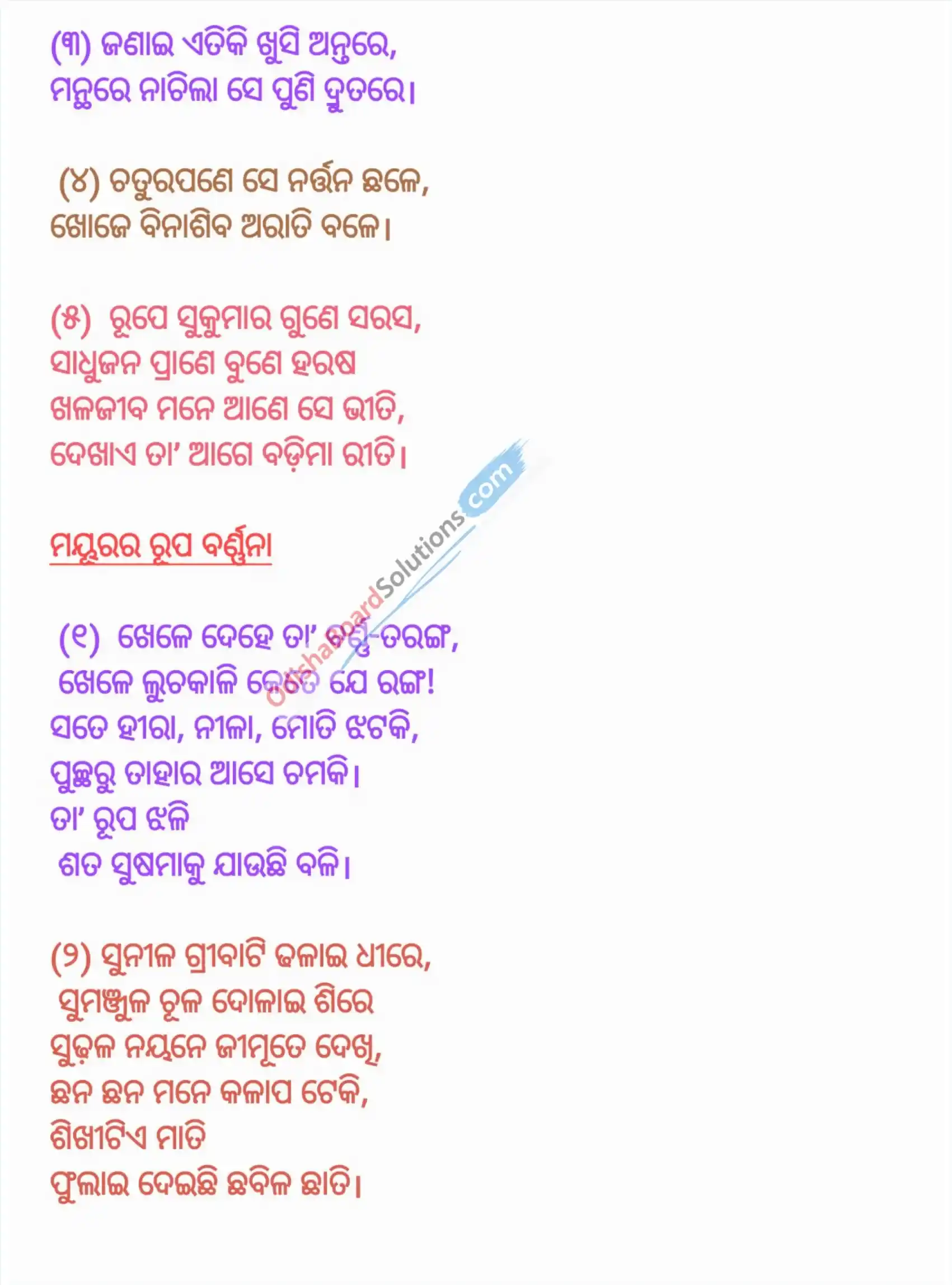
Q: What does the poet compare the colorful flashes of the peacock’s tail to in Stanza 3? A: He compares them to the glittering shimmer of precious gems like diamonds (ହୀରା), sapphires (ନୀଳା), and pearls (ମୋତି).
Class 7 Odia Jatiya Pakhi Question Answer
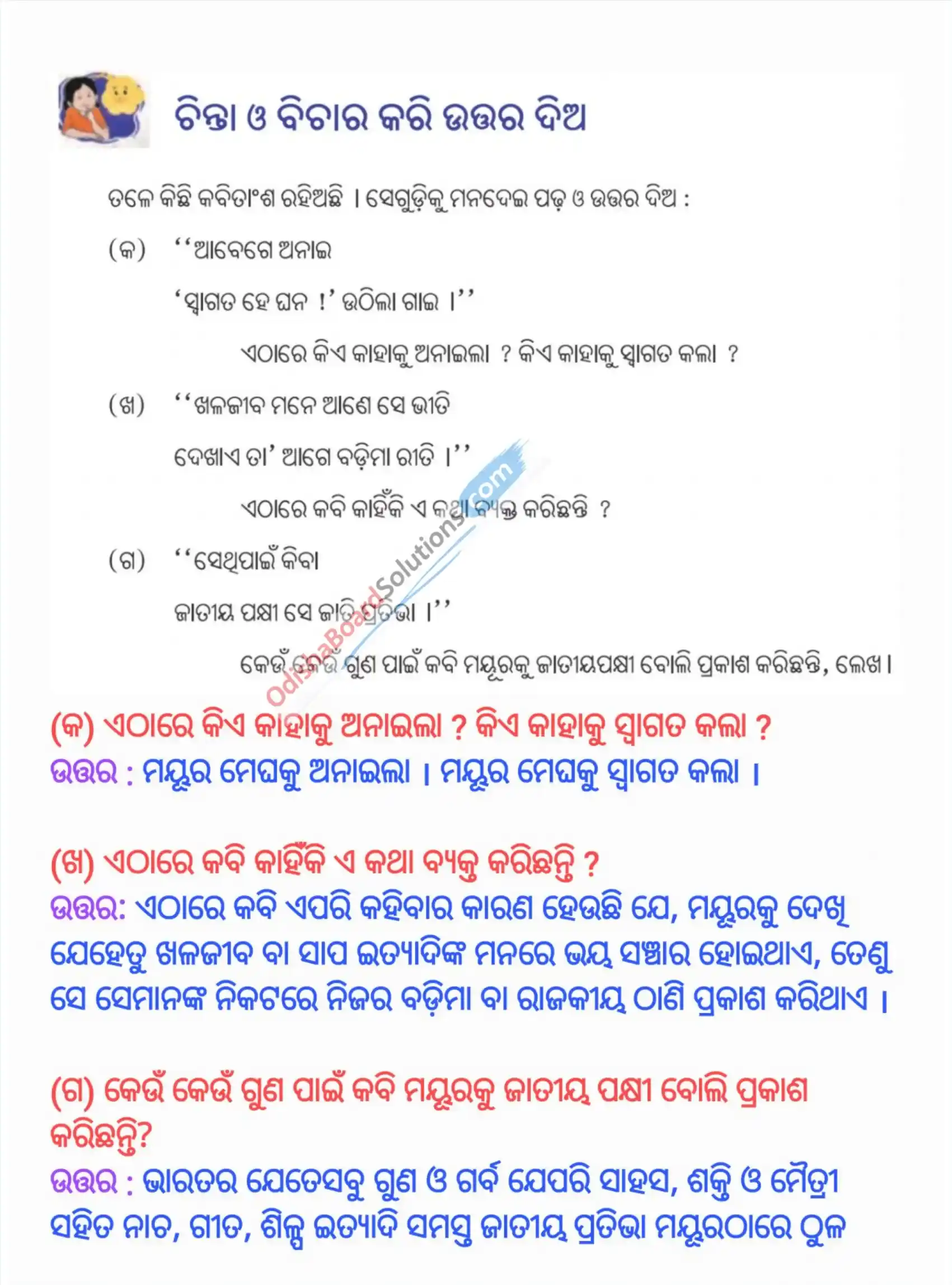
Q: What social issues did Ananta Patnaik actively write against in his literary career? A: As a modern progressive writer, Ananta Patnaik raised a sharp, powerful voice against prevailing superstitions , oppression , and religious bigotry in society.
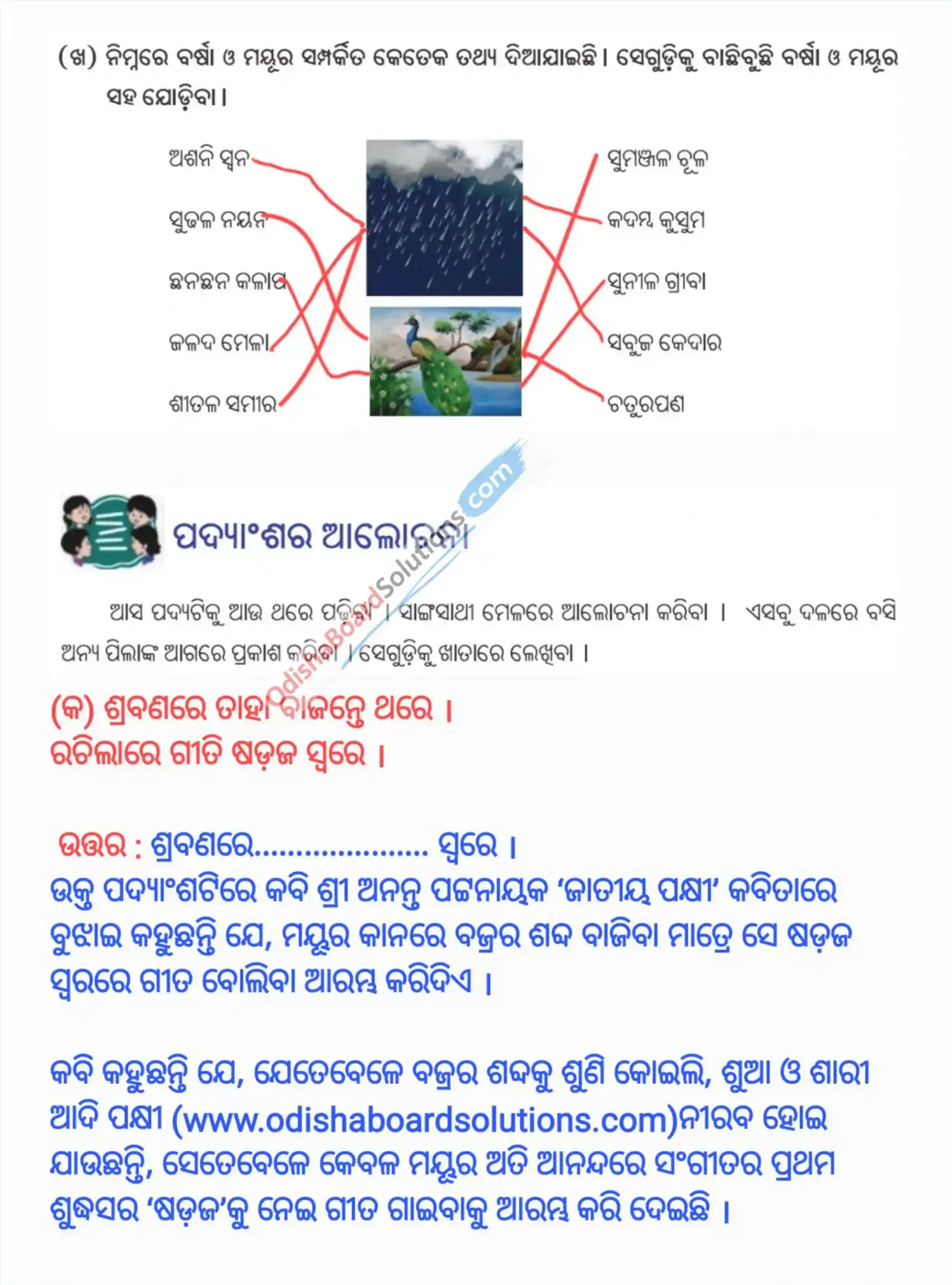
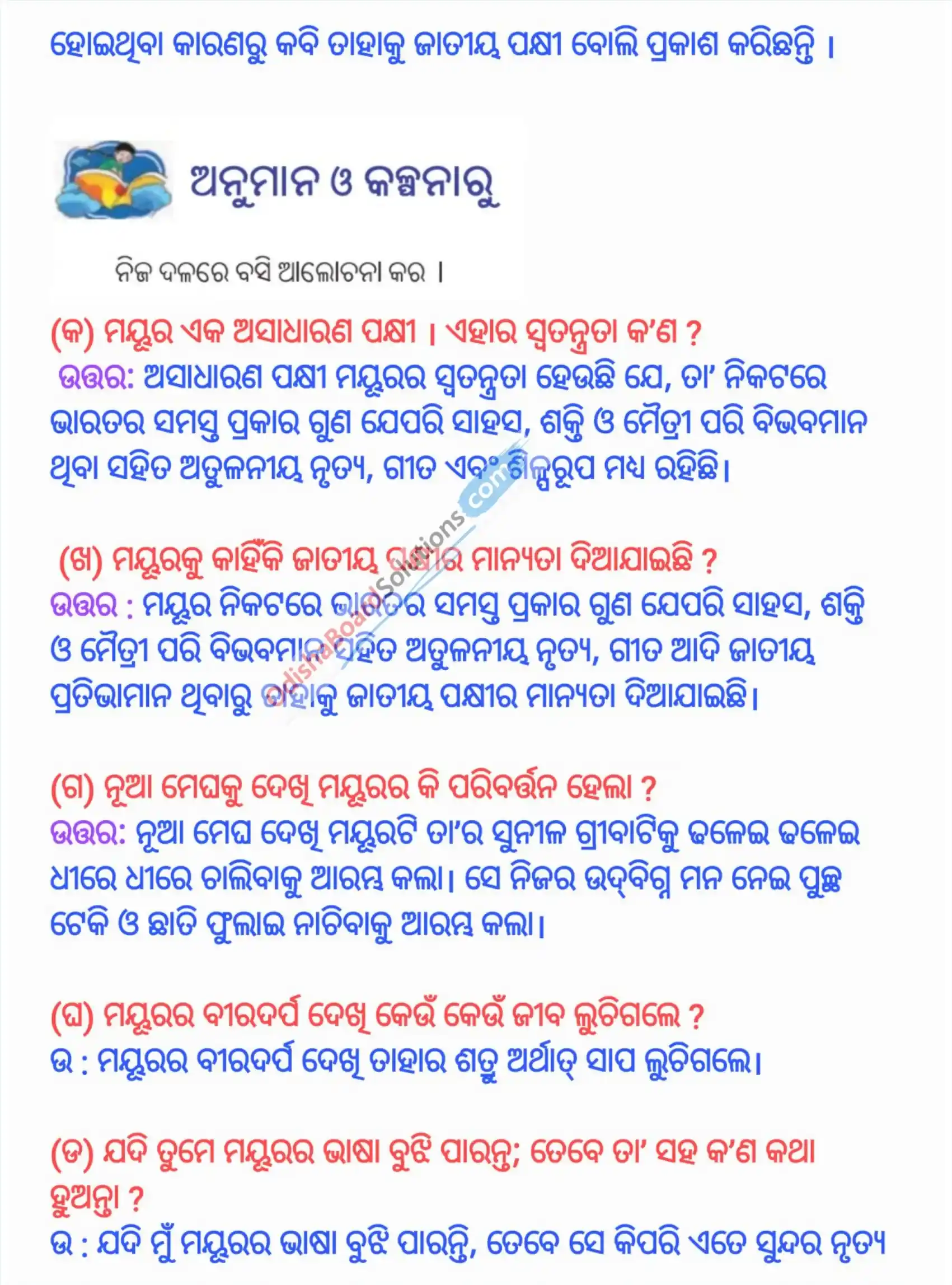
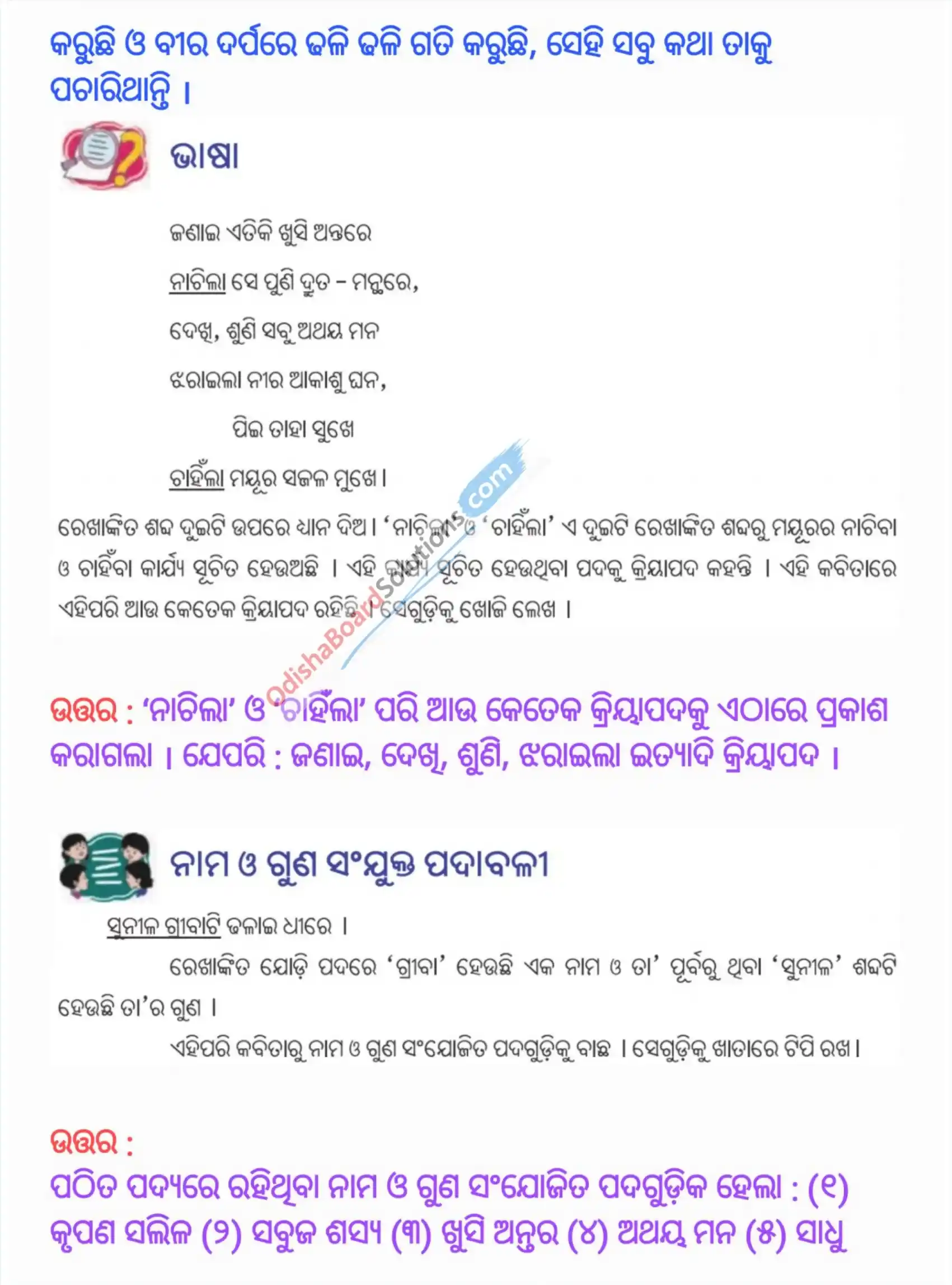
Q: How does the peacock react differently from other birds to the roaring thunder (Ashani Swana)? A: While the cuckoo, parrot, and myna freeze and fall silent out of intense fear of the thunderous roar, the peacock feels ecstatic. It looks up at the sky, spreads its gorgeous tail feathers, and uses its melodic Shadaja note ) to passionately sing out a welcome to the clouds (“Welcome, O Cloud!”).
Q: What unselfish prayer or request does the peacock make to the rain clouds? A: The peacock requests the cloud not to be a miser (Krupana) with its water (Salila), even if it chooses to stay far away. It begs the cloud to shower rain so that dry trees and vines can smile with flowers, agricultural fields can fill with lush green crops (Sabuja Shasya), and the thirst and misery of all living creatures on Earth can be permanently quenched.
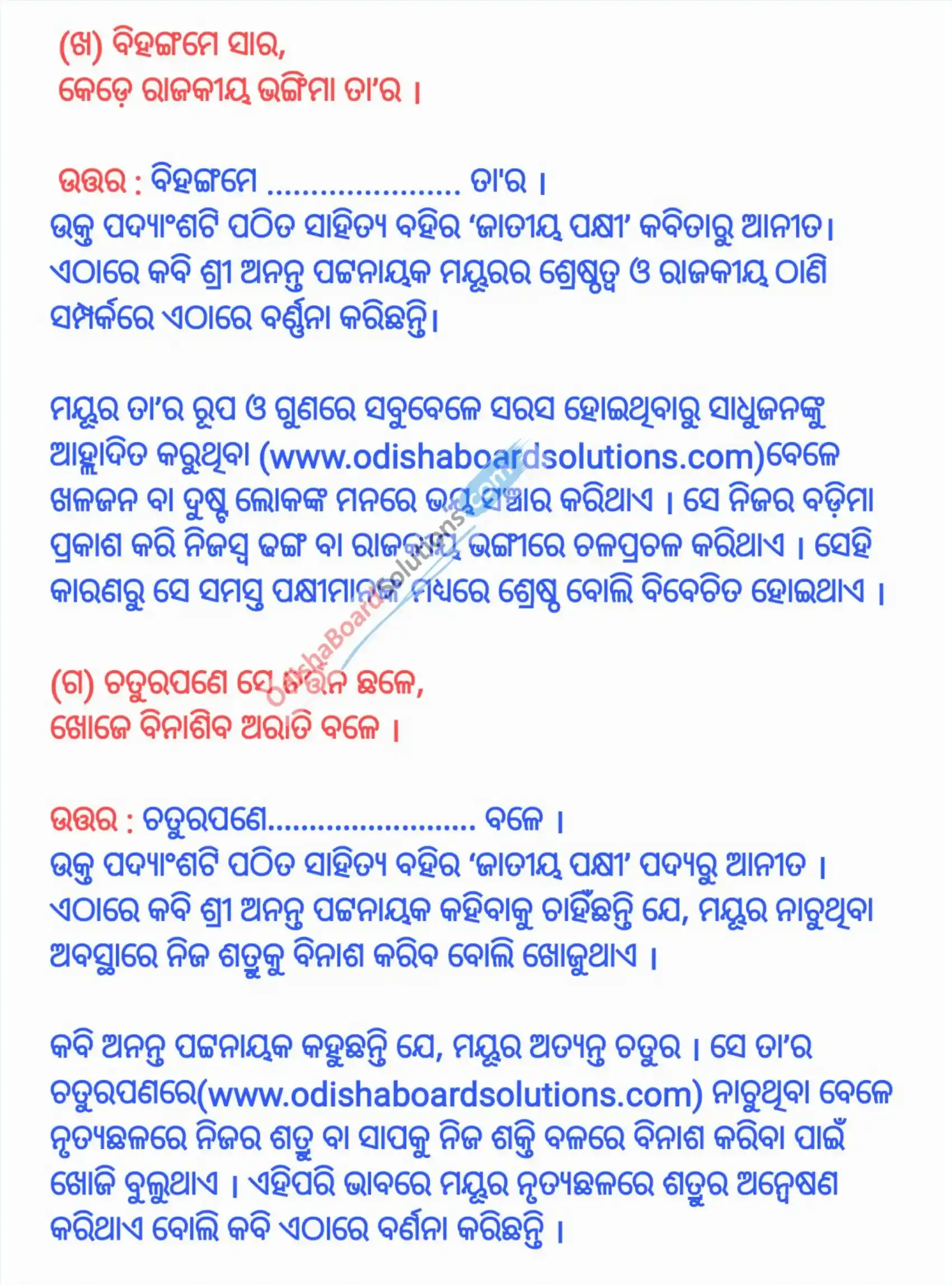
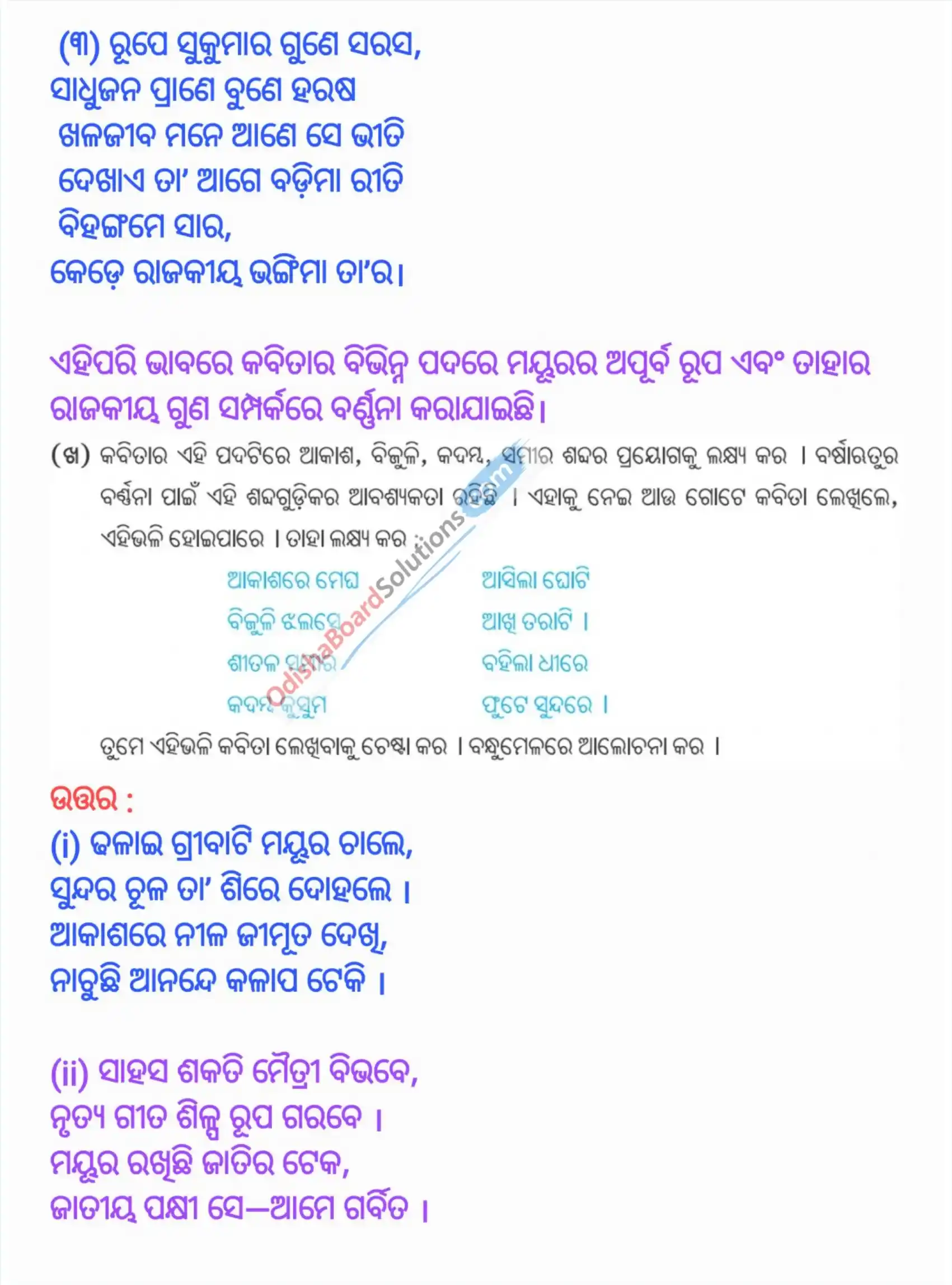
Q: How do the poisonous snakes (Bishadhara) react when the peacock begins its dance? A: The peacock moves with the confident gait of a warrior (Beera). Under the guise of dancing, it cleverly searches for its natural enemies—the snakes. The moment the venomous snakes catch a mere glimpse of the peacock’s shadow (Chhai), they panic and instantly run to hide away.
Jatiya Pakhi Class 7 Odia Long Question Answer
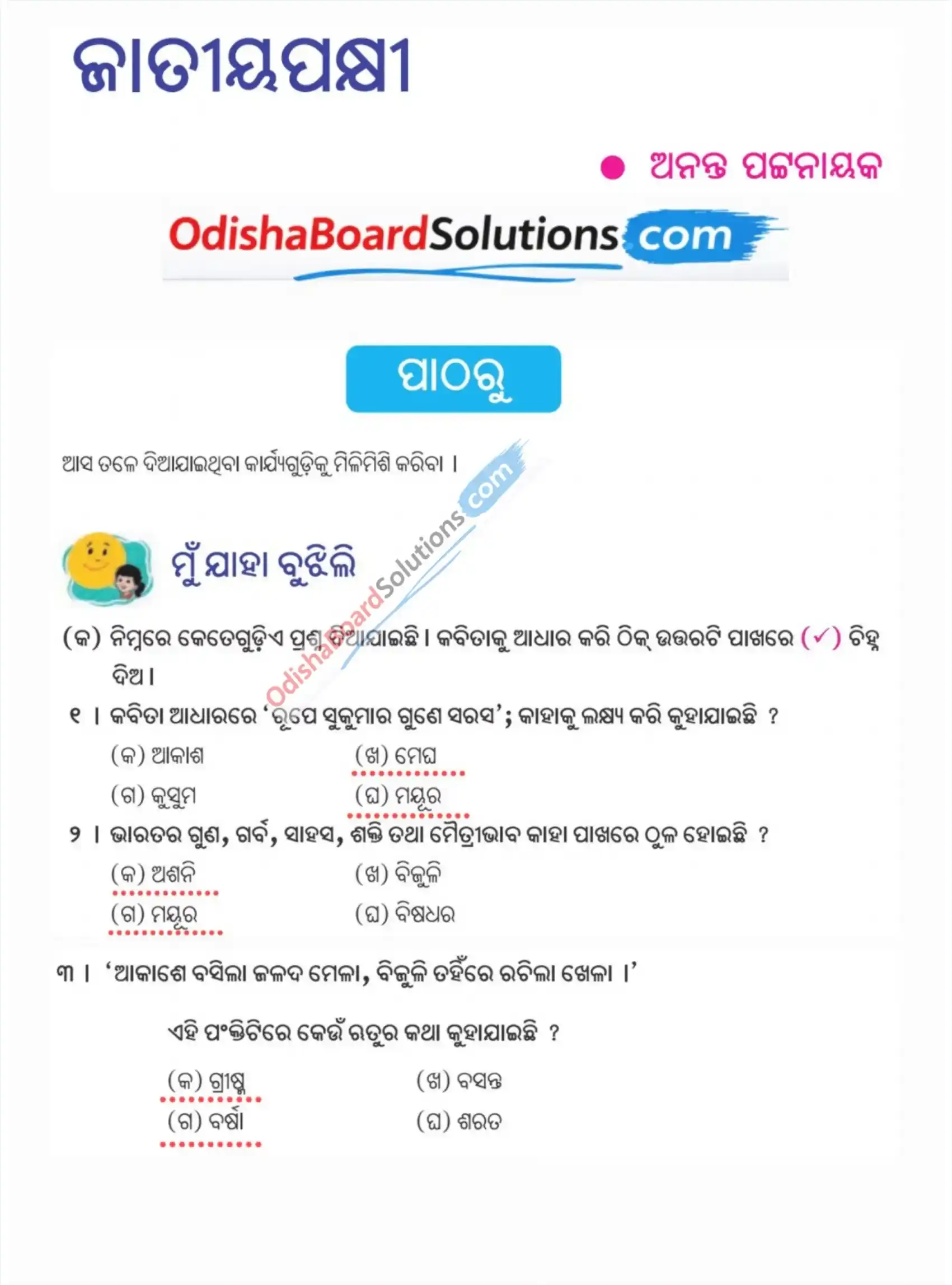
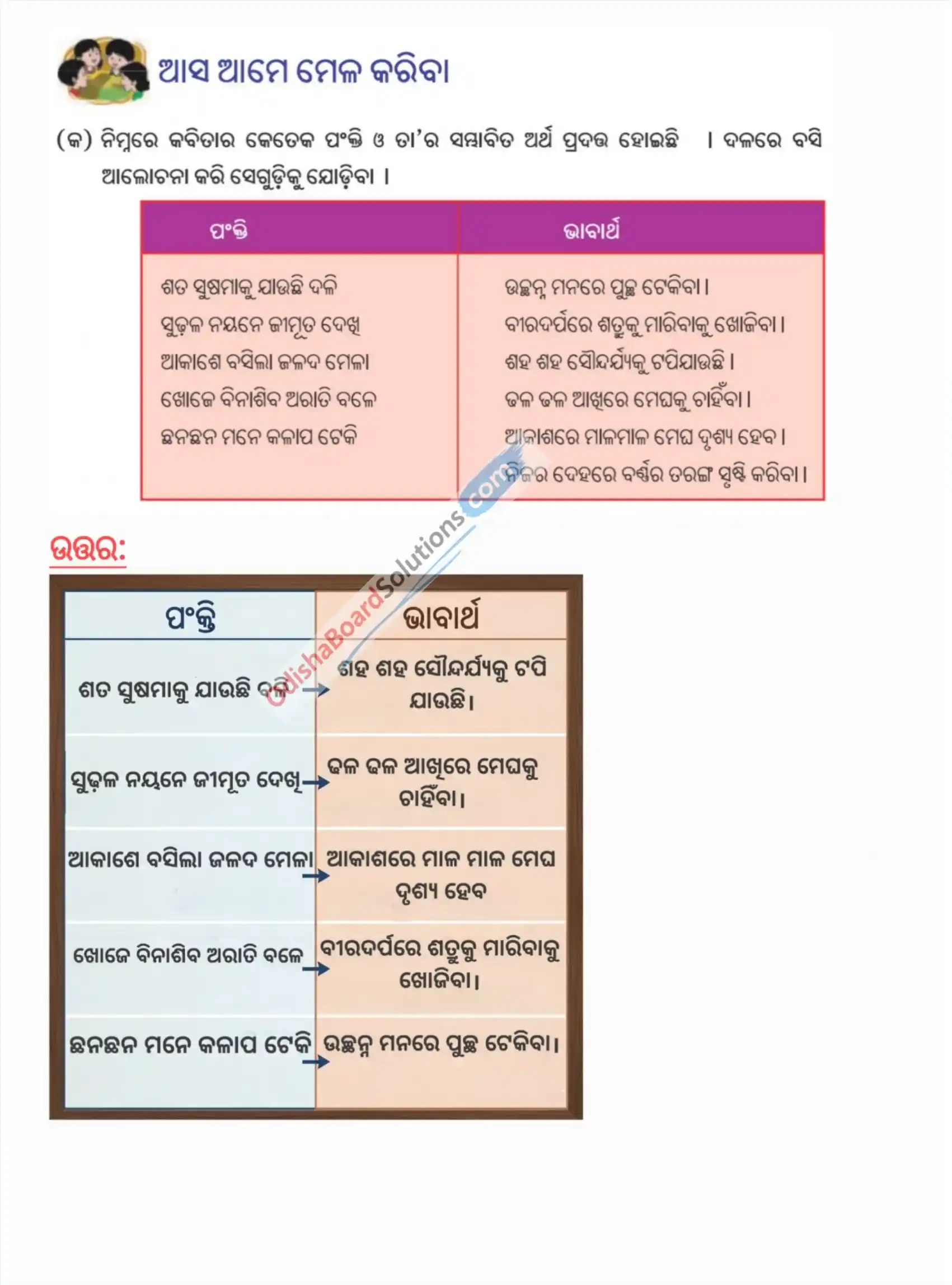
Q: Describe the natural environment and atmospheric changes that take place in the opening stanza of the poem. A: The poem opens by painting a vivid picture of the arrival of the monsoon season. Dense rain clouds (Jalada) gather and cluster across the sky, turning it dark. Bright streaks of lightning play hide-and-seek among the clouds, creating a dramatic visual sequence. This is accompanied by intermittent, heavy cracks of thunder (Ashani Swana). On the ground, a cool, refreshing breeze (Sheetala Sameera) begins to blow, which makes the skin of the Earth thrill and goosebump (Shiharai Mahi) with anticipation. Finally, the blooming Kadamba flowers fill the woodland with radiant color and beauty.
Q: Why does the poet argue that the peacock is perfectly suited to be the National Bird (Jatiya Pakhi) of India? A: According to the final stanza, the poet asserts that the peacock is not merely a beautiful bird, but a living embodiment of India’s cultural and spiritual identity. He explains that all of India’s greatest virtues—its pride (Garaba), raw courage (Sahasa), inner strength (Shakati), and rich heritage of friendship (Maitree)—are naturally concentrated within this single creature. Furthermore, its graceful movements represent the pinnacle of Indian classical dance, music, and fine arts. Because it carries the grand talent, soul, and royal elegance (Rajakiya Bhangima) of the whole country, it is honored as the National Bird and a symbol of national genius (Jati Pratibha).